NPT pipe fittings are among the most widely used connection types in hydraulic, plumbing, industrial, and fluid transfer systems across North America. Known for their tapered thread design and reliable sealing performance, NPT fittings are commonly used in hydraulic machinery, construction equipment, manufacturing systems, and industrial piping applications.
Choosing the correct NPT pipe fittings is critical because improper thread connections can lead to leaks, pressure loss, equipment damage, and costly downtime. Understanding how NPT fittings work helps improve hydraulic system efficiency, safety, and long-term performance.
What Are NPT Pipe Fittings?
NPT stands for National Pipe Taper. These fittings use tapered threads that create a seal as the male and female threads tighten together. Unlike straight-thread fittings, NPT threads become tighter as they are assembled, creating a strong mechanical seal.
NPT fittings follow ANSI/ASME B1.20.1 standards and are one of the most common thread standards used in the United States for hydraulic and industrial applications.
How NPT Fittings Work
NPT pipe fittings seal through thread interference. As the tapered threads engage, they compress tightly against each other to prevent fluid leakage.
Most standard NPT fittings also require:
- PTFE tape
- Pipe thread sealant
- Pipe dope
These sealing materials help fill microscopic gaps between threads for a leak-free connection.
Key Features of NPT Pipe Fittings
Tapered Thread Design
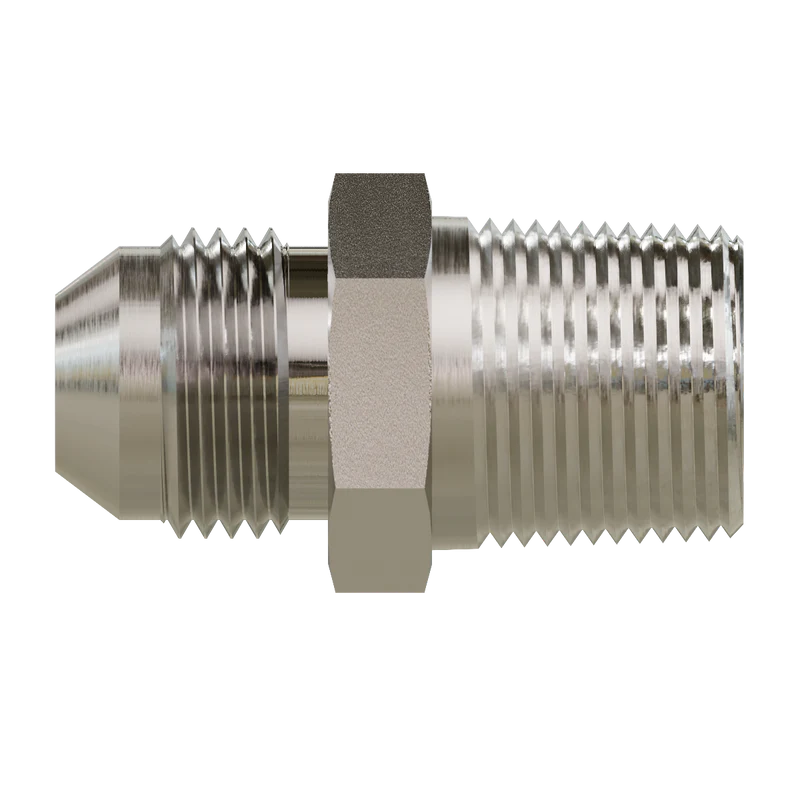
The tapered thread structure is the defining feature of NPT fittings. The thread diameter gradually decreases along the fitting length, creating a stronger seal as the fitting tightens.
Strong Mechanical Seal
NPT fittings provide durable sealing performance for hydraulic and fluid systems operating under pressure.
Wide Industry Compatibility
NPT fittings are used throughout North America in:
- Hydraulic systems
- Pneumatic systems
- Industrial piping
- Oil and gas equipment
- Water systems
- Air systems
Multiple Material Options
NPT fittings are available in:
- Carbon steel
- Stainless steel
- Brass
- Iron
Different materials are selected based on pressure requirements and environmental conditions.
Common Applications of NPT Hydraulic Fittings
NPT pipe fittings are widely used in industries where fluid transfer and pressure control are essential.
Common applications include:
- Construction machinery
- Agricultural equipment
- Hydraulic hoses
- Manufacturing plants
- Pneumatic tools
- Oil and gas systems
- Industrial fluid systems
Their versatility makes them one of the most common hydraulic fitting types used today.
NPT vs NPTF Fittings
Many hydraulic professionals also use NPTF fittings, sometimes called Dryseal fittings.
| Feature |
NPT |
NPTF |
| Thread Type |
Tapered |
Tapered |
| Seal Method |
Requires sealant |
Dry mechanical seal |
| Leak Prevention |
Good |
Better |
| Common Applications |
General fluid systems |
Hydraulic systems |
| Sealant Needed |
Usually yes |
Often no |
NPTF fittings are designed to reduce leakage by improving metal-to-metal sealing between thread roots and crests.
Advantages of NPT Pipe Fittings
Reliable Performance
NPT fittings are trusted for their strength and durability in medium- and high-pressure systems.
Easy Availability
Because NPT is the standard thread system in North America, fittings are widely available in many sizes and materials.
Cost-Effective Solution
NPT pipe fittings are generally affordable and suitable for a wide range of industrial and hydraulic applications.
Strong Vibration Resistance
When installed correctly, NPT fittings can handle vibration and demanding operating environments effectively.
Limitations of NPT Fittings
Although NPT fittings are popular, they do have some limitations.
Thread Damage Risk
Since sealing depends on thread deformation, repeated assembly and disassembly can wear out the threads over time.
Over-Tightening Problems
Excessive tightening may crack ports or damage fittings. Hydraulic professionals often recommend using proper torque specifications during installation.
Not Ideal for Extreme Pressure
Many hydraulic technicians on Reddit note that ORB or ORFS fittings are often preferred over NPT for ultra-high-pressure hydraulic systems because they provide better sealing reliability.
How to Identify NPT Pipe Fittings
NPT fittings can usually be identified by:
- Tapered threads
- 60-degree thread angle
- Thread sealing with tape or sealant
- American thread standard sizing
Hydraulic experts also recommend checking thread pitch carefully because NPT fittings can sometimes be confused with BSPT threads, which use a different thread angle.
Why High-Quality NPT Fittings Matter
Low-quality hydraulic fittings can cause leaks, pressure failure, and expensive downtime. Using premium NPT pipe fittings helps improve hydraulic system performance, reliability, and safety.
For dependable hydraulic solutions, Gear House Hydraulics offers a wide range of NPT pipe fittings designed for industrial and hydraulic applications.
Final Thoughts
NPT pipe fittings remain one of the most widely used connection types in hydraulic and industrial systems because of their strength, simplicity, and reliability. Their tapered thread design provides effective sealing for fluid transfer systems across multiple industries.
Whether you work in hydraulics, manufacturing, agriculture, or industrial piping, selecting high-quality NPT pipe fittings is essential for maintaining safe, leak-free, and efficient hydraulic operations.



 English
 Arabic
 French
 Spanish
 Portuguese
 Turkish
 Dutch
Dutch
 Italiano
 Russian
 Romaian
 Portuguese (Brazil)
 Greek
Greek