The Structural Shift in Financial Architecture
Traditional financial systems rely heavily on intermediaries such as banks, brokers, custodians, and clearinghouses. While these institutions provide trust and regulatory oversight, they also introduce inefficiencies, delays, and costs.
RWA tokenization restructures this model by embedding trust into code. Smart contracts automate processes such as settlement, compliance checks, and dividend distribution. This reduces reliance on intermediaries and enables near-instant transactions.
From Centralized to Programmable Finance
One of the defining characteristics of tokenized assets is programmability. Financial logic can be embedded directly into tokens, allowing for:
- Automated revenue sharing
- Conditional transfers based on regulatory compliance
- Dynamic pricing mechanisms
- Real-time auditing and transparency
This programmability transforms assets into active financial instruments rather than static holdings.
Unlocking Liquidity in Traditionally Illiquid Markets
A major limitation of many real-world assets is illiquidity. Real estate, infrastructure projects, and private equity investments often require large capital commitments and long holding periods. Tokenization addresses this by enabling fractional ownership.
Fractionalization and Market Accessibility
Through tokenization, a high-value asset can be divided into smaller units, allowing a broader range of participants to gain exposure. For instance, a commercial property valued at $20 million can be split into thousands of tokens, each representing a small ownership stake.
This fractionalization has several implications:
- Lower barriers to entry for investors
- Increased market participation
- Enhanced price discovery through secondary trading
- Improved capital efficiency
By enabling smaller investments, tokenization democratizes access to asset classes that were previously limited to institutional investors.
Globalization of Asset Markets
One of the most transformative aspects of RWA tokenization is its ability to create globally accessible markets. Traditional investment opportunities are often constrained by geographic, regulatory, and currency barriers. Tokenized assets, however, can be traded on blockchain networks accessible worldwide.
Borderless Investment Ecosystems
Tokenization enables:
- Cross-border participation without complex intermediaries
- 24/7 trading availability
- Reduced currency conversion friction
- Seamless integration with digital wallets and decentralized platforms
This global accessibility not only increases liquidity but also diversifies the investor base, reducing concentration risks in specific markets.
Enhancing Transparency and Trust
Transparency is a critical component of financial systems, yet traditional markets often suffer from opaque processes and delayed reporting. Blockchain technology addresses this by providing an immutable and transparent ledger.
Real-Time Verification
Tokenized assets benefit from:
- On-chain transaction records
- Transparent ownership history
- Automated compliance tracking
- Reduced risk of fraud and manipulation
Investors can verify asset details and transaction histories in real time, enhancing trust and reducing reliance on third-party verification.
Integration with Decentralized Finance (DeFi)
RWA tokenization bridges the gap between traditional finance and decentralized finance. By bringing real-world assets onto blockchain networks, these assets can be integrated into DeFi protocols.
Expanding Financial Utility
Tokenized RWAs can be used in:
- Lending and borrowing platforms as collateral
- Yield-generating strategies
- Liquidity pools
- Structured financial products
This integration expands the utility of real-world assets, transforming them into dynamic components of a broader financial ecosystem.
Use Cases Across Key Sectors
Real Estate
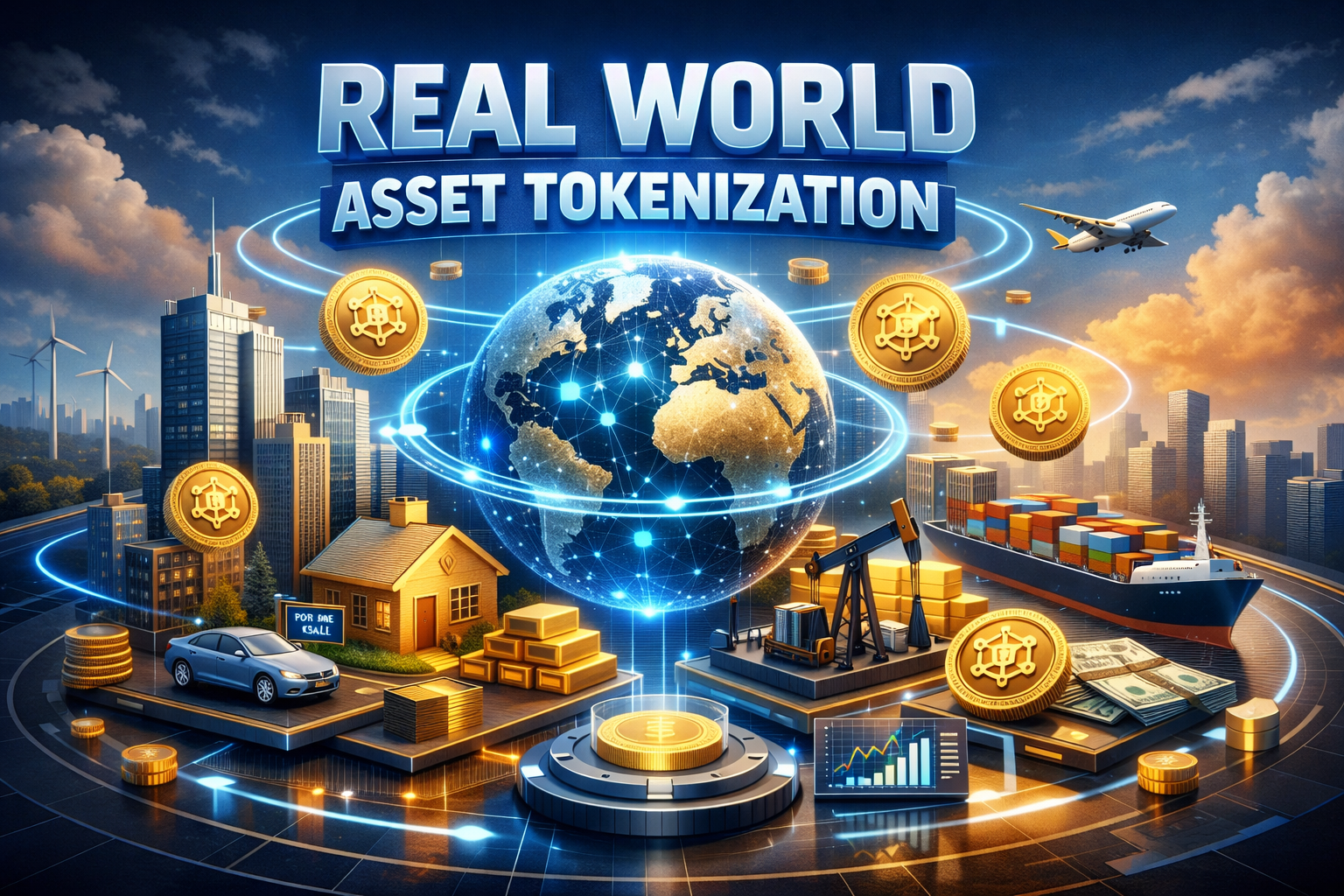
Real estate is one of the most prominent sectors for tokenization. Tokenized properties enable fractional ownership, streamlined transactions, and global participation. Investors can gain exposure to residential, commercial, or industrial assets without the complexities of traditional property ownership.
Commodities
Tokenization of commodities such as gold and oil allows for easier trading and storage. Digital tokens backed by physical reserves provide a more efficient alternative to traditional commodity markets.
Infrastructure and Logistics
Large-scale infrastructure projects often require substantial capital and long investment horizons. Tokenization enables these assets to be divided into smaller investment units, attracting a wider range of participants.
Art and Collectibles
High-value artworks and collectibles can be tokenized to allow shared ownership. This not only increases accessibility but also provides liquidity in markets that are traditionally illiquid.
Financial Instruments
Bonds, equities, and other financial instruments can be tokenized to enhance efficiency and reduce settlement times. Smart contracts can automate interest payments and compliance requirements.
Regulatory Considerations and Challenges
Despite its potential, RWA tokenization faces several regulatory and operational challenges. Financial systems are heavily regulated, and integrating blockchain-based assets requires alignment with existing legal frameworks.
Key Challenges
- Regulatory Uncertainty: Different jurisdictions have varying approaches to tokenized assets
- Asset Verification: Ensuring the authenticity and valuation of underlying assets
- Custody and Security: Safeguarding both digital tokens and physical assets
- Legal Enforceability: Establishing clear ownership rights and dispute resolution mechanisms
Addressing these challenges requires collaboration between regulators, technology providers, and financial institutions.
Infrastructure Requirements for Tokenization
The successful implementation of RWA tokenization depends on a robust technological and operational infrastructure.
Core Components
- Blockchain Networks: Provide the foundation for token issuance and transactions
- Smart Contracts: Automate rules and processes
- Custodians: Manage physical assets and ensure their linkage to digital tokens
- Oracles: Supply real-world data to blockchain systems
- Compliance Frameworks: Ensure adherence to regulatory requirements
These components must work seamlessly to create a reliable and scalable tokenization ecosystem.
Economic Implications
RWA tokenization has the potential to reshape global capital markets by increasing efficiency, reducing costs, and expanding access.
Capital Formation
Tokenization enables new methods of raising capital by allowing asset owners to monetize portions of their holdings without selling them entirely. This can unlock dormant capital and support economic growth.
Market Efficiency
Automated processes reduce transaction costs and settlement times, improving overall market efficiency. This can lead to more competitive pricing and better allocation of resources.
Financial Inclusion
By lowering entry barriers, tokenization allows individuals and smaller institutions to participate in markets that were previously inaccessible. This contributes to a more inclusive financial system.
Risks and Limitations
While promising, tokenization is not without risks. Understanding these limitations is essential for its sustainable development.
Technological Risks
- Smart contract vulnerabilities
- Network scalability issues
- Dependence on external data sources
Market Risks
- Liquidity fragmentation across platforms
- Price volatility in secondary markets
Legal Risks
- Unclear regulatory frameworks
- Jurisdictional conflicts
Mitigating these risks requires ongoing innovation, standardization, and regulatory clarity.
The Future of Tokenized Finance
RWA tokenization is still in its early stages, but its trajectory suggests a significant transformation in how financial systems operate. As technology matures and regulatory frameworks evolve, tokenized assets are likely to become a core component of global finance.
Convergence with Traditional Systems
Rather than replacing traditional finance, tokenization is expected to integrate with existing systems. Banks, asset managers, and financial institutions are increasingly exploring tokenized solutions to enhance their operations.
Emergence of Hybrid Models
Hybrid financial models that combine traditional and decentralized elements are likely to emerge. These models will leverage the strengths of both systems to create more resilient and efficient markets.
Standardization and Interoperability
The development of standardized protocols and interoperable platforms will be critical for scaling tokenization. This will enable seamless interaction between different blockchain networks and financial systems.
Conclusion
Real-world asset tokenization represents a fundamental shift in the architecture of global finance. By digitizing ownership and embedding financial logic into programmable tokens, it introduces new levels of efficiency, accessibility, and transparency.
This transformation is not limited to a single sector but spans real estate, commodities, infrastructure, and financial instruments. It redefines how assets are created, managed, and exchanged, paving the way for a more interconnected and inclusive financial ecosystem.
As the technology continues to evolve, the success of RWA tokenization will depend on the alignment of innovation, regulation, and market adoption. If these elements converge effectively, tokenization could serve as the foundation for the next generation of global financial systems, reshaping the flow of capital and expanding access to economic opportunities worldwide.



 English
 Arabic
 Spanish
 Portuguese
 Deutsch
 Turkish
 Dutch
Dutch
 Italiano
 Russian
 Romaian
 Portuguese (Brazil)
 Greek
Greek