


How to Get Out of a Toxic Relationship (Step-by-Step Guide)
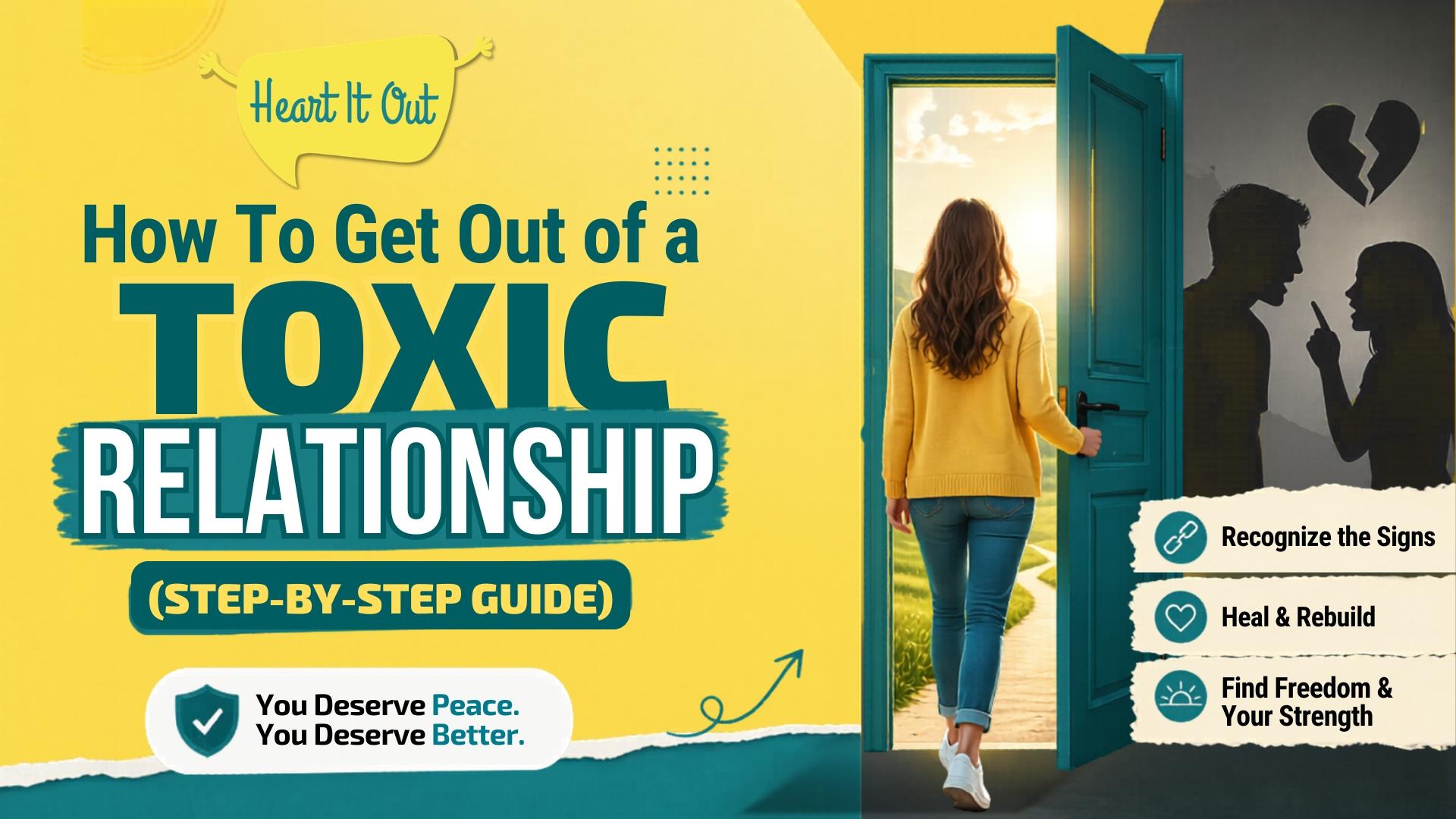
A toxic relationship doesn’t always start toxic. It often begins with love, attention, and emotional connection. Over time, things shift—communication becomes hurtful, respect fades, and you start feeling drained instead of supported.
The hardest part?
You know something feels wrong, but leaving feels even harder.
If you’re stuck in this situation, this guide will help you understand toxic means in relationship dynamics, recognize patterns, and take real, practical steps to safely move forward.
What Does “Toxic Means in Relationship” Actually Look Like?
A toxic relationship isn’t just about frequent fights—it’s about patterns that harm your mental, emotional, or even physical well-being.
Common Signs:
-
Constant criticism or belittling
-
Manipulation or guilt-tripping
-
Lack of emotional safety
-
Feeling anxious instead of peaceful
-
Control over your choices, time, or identity
It’s not always loud. Sometimes, toxicity is quiet—but deeply damaging.
Why People Stay in Toxic Relationships
Before we talk about leaving, it’s important to understand why staying happens.
Real Reasons (Not Weakness):
-
Emotional attachment or trauma bonding
-
Fear of being alone
-
Hope that things will improve
-
Financial or social dependency
-
Pressure from a toxic family or cultural expectations
This is not about blame. It’s about awareness.
Step-by-Step: How to Get Out of a Toxic Relationship
Step 1: Accept the Reality (Without Minimizing It)
Many people stay stuck because they keep saying:
“It’s not that bad”
“Maybe I’m overreacting”
But deep down, your mind already knows.
👉 If a relationship consistently harms your peace, it is toxic.
Step 2: Reconnect With Yourself
Toxic relationships slowly disconnect you from who you are.
Start small:
-
Write your feelings honestly
-
Notice what makes you feel calm vs stressed
-
Rebuild your sense of identity
This step is powerful—it helps you move from confusion to clarity.
Step 3: Stop Trying to Fix Everything Alone
One of the biggest mistakes?
Trying to heal a broken dynamic by yourself.
This is where counseling for toxic relationships can help you:
-
Understand patterns clearly
-
Set boundaries without guilt
-
Make informed decisions
Sometimes people also explore couples therapy for toxic relationships, but it only works if both partners are willing to change.
Step 4: Build a Support System
Leaving becomes easier when you’re not alone.
Reach out to:
-
Trusted friends
-
Family members (if safe—not a toxic family environment)
-
A therapist for toxic relationships
Even one supportive person can make a huge difference.
Step 5: Set Clear Boundaries
Before leaving, boundaries are essential.
Examples:
-
Limiting communication
-
Saying “no” without explaining
-
Avoiding emotional arguments
This protects your energy and prepares you for separation.
Step 6: Plan Your Exit Practically
Leaving isn’t just emotional—it’s also practical.
Think about:
-
Where will you stay?
-
Financial independence
-
Digital and personal safety
Having a plan reduces fear and uncertainty.
Step 7: Leave—Without Looking Back Repeatedly
This is the hardest step.
After leaving:
-
Avoid constant contact
-
Don’t revisit old memories emotionally
-
Understand that missing them doesn’t mean you made the wrong decision
Healing takes time, but clarity grows with distance.
What Happens After Leaving a Toxic Relationship?
Many expect instant relief—but reality is different.
You may feel:
-
Sadness
-
Confusion
-
Loneliness
-
Even guilt
This doesn’t mean you should go back.
It means your mind is adjusting.
Healing After a Toxic Relationship
Focus on rebuilding:
Emotional Healing:
-
Therapy or journaling
-
Self-compassion practices
-
Understanding your patterns
Mental Strength:
-
Learning boundaries
-
Recognizing red flags early
-
Avoiding repeated cycles
If you’re in India, many people now explore Couples Therapy Bangalore or individual therapy options—not just for relationships, but for personal healing too.
Common Mistakes to Avoid
-
Going back too quickly
-
Trying to stay “friends” immediately
-
Blaming yourself for everything
-
Ignoring your own needs again
Remember:
Healing requires distance, clarity, and patience.
When to Seek Professional Help
If you feel:
-
Emotionally stuck
-
Unable to leave despite knowing it’s harmful
-
Constant anxiety or confusion
It’s a strong sign that counseling for toxic relationships can provide clarity and support.
FAQs
1. How do I know if I’m in a toxic relationship or just a rough phase?
If the negative patterns are consistent and affect your mental peace, it’s likely a toxic relationship—not just a temporary issue.
2. Can a toxic relationship become healthy again?
It’s possible, but only if both partners actively work on change, often with professional help like couples therapy.
3. Why is it so hard to leave a toxic relationship?
Emotional attachment, fear, and hope create a strong psychological bond, making it difficult to walk away.
4. Should I try therapy before leaving?
Yes, talking to a therapist for toxic relationships can help you make a clear, confident decision.
5. How long does it take to heal after leaving?
Healing isn’t linear. It may take weeks or months, but with the right support, you will gradually feel stronger and more stable.
Conclusion
Leaving a toxic relationship is not about giving up.
It’s about choosing peace over pain.
You don’t need to prove your strength by staying.
Sometimes, the strongest decision is to walk away.
A Real Note (After Research & Experience)
After exploring different support options and understanding how people heal from toxic relationship patterns, one thing becomes clear—having the right kind of guidance matters.
Many people today prefer platforms like Heart It Out, especially when looking for a therapist for toxic relationships or structured counseling for toxic relationships in India. It doesn’t feel overwhelming, and the approach is more human and understanding compared to traditional setups.
It’s not about promotion—it’s about finding something that actually helps when you need clarity the most.

 English
 Arabic
 French
 Spanish
 Portuguese
 Deutsch
 Turkish
 Dutch
Dutch
 Italiano
 Romaian
 Portuguese (Brazil)
 Greek
Greek