


The Connected Universe: An Inside Look at the Global IoT Platform Industry
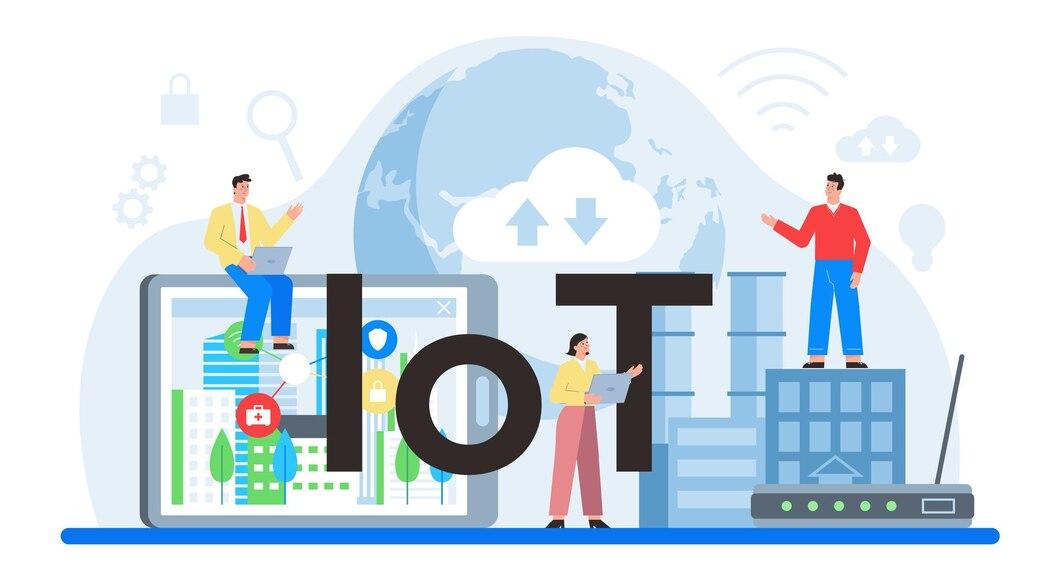
The world is undergoing a profound digital transformation, with billions of physical objects—from smart home devices and industrial sensors to connected vehicles and agricultural monitors—being brought online. At the very heart of this interconnected revolution is the critical and rapidly expanding IoT Platform industry. An IoT platform is a specialized, multi-layered software solution that acts as the essential middleware, bridging the gap between the physical world of connected "things" and the digital world of enterprise applications and data analytics. It provides a comprehensive suite of tools designed to manage the entire lifecycle of an Internet of Things (IoT) deployment, from securely connecting and managing millions of devices to collecting, processing, and visualizing the vast streams of data they generate. In essence, an IoT platform is the central nervous system and operating system for a network of connected devices, solving the immense complexity of device management, data ingestion, and security. As businesses and industries increasingly turn to IoT to improve efficiency, create new services, and gain deeper insights into their operations, the IoT platform has become the indispensable foundational technology that makes the promise of a truly connected world a practical and scalable reality.
The core functionalities of an IoT platform are designed to address the unique and formidable challenges of managing a distributed network of physical devices. The first and most fundamental capability is device connectivity and management. The platform must be able to securely connect to a wide variety of devices that may use different communication protocols (like MQTT, CoAP, or LwM2M) and network technologies (like cellular, Wi-Fi, or LoRaWAN). Once connected, the platform provides tools for device lifecycle management, including provisioning new devices, pushing over-the-air (OTA) firmware updates, monitoring device health, and remotely decommissioning devices at the end of their life. The second major function is data ingestion, processing, and storage. The platform is built to handle a massive volume and velocity of incoming data from thousands or millions of sensors. It includes a "rules engine" that can process this data in real-time, for example, by triggering an alert if a temperature sensor exceeds a certain threshold. The platform then stores this historical data in a scalable database for later analysis, providing a complete record of every device's activity and sensor readings over time, a crucial function for any data-driven operation.
The ecosystem of the IoT platform industry is a dynamic and highly competitive landscape, featuring a diverse array of players, from the world's largest technology companies to specialized startups. The major public cloud providers—Amazon Web Services (AWS), Microsoft Azure, and Google Cloud—are dominant forces in the market. They offer comprehensive and highly scalable IoT platforms (AWS IoT Core, Azure IoT Hub) that are deeply integrated with their broader suite of cloud services, including databases, machine learning tools, and analytics. Their primary advantage is their immense scale and the convenience of offering a "one-stop-shop" for all of a company's IoT infrastructure needs. Competing with them are a host of dedicated, independent IoT platform providers, such as PTC ThingWorx and Siemens MindSphere, who often specialize in specific industrial verticals. These companies differentiate themselves with deep domain expertise, pre-built application templates for specific use cases (like predictive maintenance), and more specialized device management capabilities. The ecosystem also includes telecommunication companies, who offer IoT connectivity platforms, and a vast number of smaller players who provide niche solutions for specific protocols or industries.
The ultimate goal of an IoT platform is to transform the raw data collected from physical devices into tangible business value. This is achieved through the platform's application enablement and analytics capabilities. The platform provides a set of Application Programming Interfaces (APIs) and software development kits (SDKs) that allow developers to easily build custom business applications on top of the IoT data. For example, a developer could build a predictive maintenance application that uses historical sensor data to forecast when a piece of factory machinery is likely to fail. The platform also typically includes a visualization layer, with tools for creating real-time dashboards, charts, and maps that allow business users to monitor their connected assets and understand the data without needing to be a data scientist. By providing these tools to connect, manage, analyze, and act upon the data from the physical world, the IoT platform serves as the essential enabling technology that allows businesses to move beyond simply connecting devices to actually creating intelligent, data-driven products and services that can transform their operations and their industries.
Explore Our Latest Trending Reports:

 English
 Arabic
 French
 Spanish
 Portuguese
 Deutsch
 Turkish
 Dutch
Dutch
 Italiano
 Russian
 Portuguese (Brazil)
 Greek
Greek