


How Accurate Are Online IQ Tests Compared to Real Assessments
Introduction
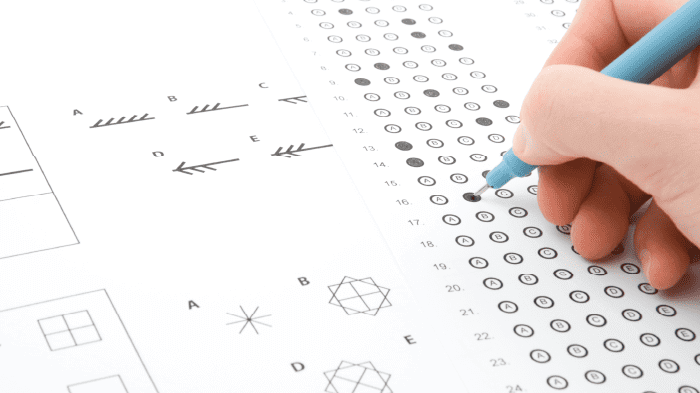
The question how accurate are online IQ tests has become increasingly popular as millions of people search for quick ways to measure their intelligence. With countless free and paid IQ tests available online, it is easy to wonder whether these assessments can truly reflect your cognitive abilities.
Some online IQ tests claim to deliver professional results in just a few minutes, while others advertise scientifically validated scores comparable to official intelligence assessments. However, not all IQ tests are created equal. Their quality, design, scoring methods, and scientific foundation vary significantly.
This article explores how accurate are online IQ tests, how they compare to professionally administered intelligence assessments, their strengths and weaknesses, and what you should know before relying on any online score.
What Is an Online IQ Test?
An online IQ test is a digital assessment designed to evaluate certain aspects of cognitive ability. Most tests include questions that measure skills such as:
-
Logical reasoning
-
Pattern recognition
-
Spatial awareness
-
Numerical reasoning
-
Verbal reasoning
-
Problem solving
Many online tests are completed within 10 to 30 minutes and provide an estimated IQ score immediately after submission.
While these tests may appear similar to professional assessments, the level of scientific accuracy differs greatly depending on how the test was developed.
How Accurate Are Online IQ Tests?
The answer depends entirely on the quality of the test.
Some online IQ tests are carefully designed using principles from psychological research and may provide a reasonable estimate of cognitive ability. Others are created mainly for entertainment and should not be interpreted as accurate measurements of intelligence.
When people ask how accurate are online iq tests the most accurate response is that their reliability exists on a spectrum rather than as a simple yes or no.
High-quality online assessments may offer useful insights into reasoning skills, while poorly designed tests can produce misleading results.
What Makes an IQ Test Accurate?
Several important factors determine whether an IQ test can provide meaningful results.
Scientific Development
Professional intelligence assessments undergo years of research before being used.
Psychologists carefully design questions, test thousands of participants, analyze statistical performance, and refine the assessment over time.
Many online tests skip this lengthy validation process, reducing their reliability.
Standardization
Official IQ tests are standardized using large groups of people from different ages, educational backgrounds, and regions.
This process helps establish accurate scoring systems and population averages.
Without proper standardization, online scores become difficult to interpret.
Reliability
Reliable tests produce consistent results.
If someone takes the same assessment under similar conditions, the scores should remain relatively stable.
Poorly designed online tests often generate noticeably different scores each time a person retakes them.
Validity
A valid IQ test measures intelligence rather than unrelated skills.
For example, a test should assess reasoning ability instead of simply rewarding memorized knowledge or familiarity with certain subjects.
Professional assessments undergo extensive validation to confirm they measure what they claim to evaluate.
How Professional IQ Assessments Differ
Professional intelligence assessments are administered under carefully controlled conditions.
A trained psychologist ensures that every participant receives identical instructions, appropriate timing, and standardized scoring procedures.
Professional assessments also include multiple cognitive domains, providing a much broader evaluation than most online alternatives.
Instead of relying on a single overall score, psychologists examine strengths and weaknesses across different areas of thinking.
This comprehensive approach increases both reliability and accuracy.
Common Limitations of Online IQ Tests
Understanding these limitations helps answer the question how accurate are online IQ tests.
Limited Question Sets
Many online assessments include only 20 to 40 questions.
Professional intelligence tests often contain significantly more items covering multiple cognitive abilities.
A smaller question pool may reduce precision.
No Professional Supervision
Distractions, interruptions, internet searches, calculators, or assistance from others can all influence online results.
Professional testing environments minimize these variables.
Unknown Scoring Methods
Many websites do not explain how they calculate IQ scores.
Without transparent scoring systems, it becomes difficult to judge the quality of the reported results.
Practice Effects
People who repeatedly complete online IQ tests often become familiar with common question patterns.
Improved scores may reflect increased familiarity rather than genuine cognitive improvement.
Can Online IQ Tests Still Be Useful?
Yes, they can provide value when used appropriately.
Online IQ tests may help individuals:
-
Practice logical reasoning
-
Challenge problem solving skills
-
Identify areas of cognitive strength
-
Prepare for formal testing formats
-
Enjoy intellectual puzzles
They should generally be viewed as educational or recreational tools unless they are supported by strong scientific research.
Factors That Affect Online IQ Scores
Several external factors influence performance regardless of whether the assessment is online or professionally administered.
Sleep
Fatigue reduces attention, concentration, and processing speed.
Well-rested individuals generally perform better.
Stress
High stress levels interfere with reasoning, memory, and decision making.
Testing during a calm period usually produces more reliable results.
Environment
Background noise, interruptions, and distractions can lower performance during online testing.
A quiet environment improves accuracy.
Motivation
People who carefully read every question and remain fully engaged often achieve more consistent results than those rushing through the assessment.
Are Free Online IQ Tests Reliable?
Free tests vary enormously in quality.
Some are based on recognized cognitive principles and offer reasonable estimates.
Others prioritize entertainment, advertising revenue, or social media sharing rather than scientific accuracy.
The absence of a fee does not automatically make a test inaccurate, just as charging money does not guarantee quality.
Instead, users should evaluate whether the assessment how accurate are online iq tests explains its methodology, development process, and scoring system.
Why Professional Assessments Remain the Gold Standard
Professional intelligence testing remains the most trusted approach because it combines scientific development with expert interpretation.
Psychologists consider many factors beyond a single score, including:
-
Processing speed
-
Working memory
-
Verbal comprehension
-
Fluid reasoning
-
Visual spatial ability
-
Overall cognitive profile
These detailed evaluations provide a much richer understanding of intellectual functioning than a brief online assessment.
Common Misconceptions About Online IQ Tests
Myth 1: Every Online IQ Test Is Fake
This is false.
Some online assessments are thoughtfully designed and may provide reasonably accurate estimates.
The challenge lies in identifying which tests follow sound scientific practices.
Myth 2: A Single Online Score Defines Intelligence
Human intelligence is far more complex than one number.
Creativity, emotional intelligence, communication, adaptability, and practical problem solving all contribute to success.
Myth 3: Higher Scores Mean Greater Success
Although intelligence can support academic and professional achievement, success also depends on persistence, discipline, motivation, emotional resilience, and effective decision making.
Myth 4: Retaking the Test Improves Intelligence
Repeated testing usually improves familiarity with question formats rather than increasing actual intelligence.
Better scores after multiple attempts often reflect practice effects.
How to Choose a Better Online IQ Test
If you decide to take an online assessment, consider these factors:
-
Look for tests developed using psychological research.
-
Choose assessments that explain their scoring methods.
-
Avoid websites making unrealistic claims such as guaranteed genius results.
-
Complete the test in a quiet environment.
-
Answer honestly without outside assistance.
-
Treat the results as estimates rather than definitive measurements.
These steps can improve the usefulness of your experience.
Should You Trust Your Online IQ Score?
For most people, an online IQ score should be viewed as an approximation.
If the assessment comes from a reputable source with strong scientific foundations, the result may provide a reasonable estimate of cognitive ability.
However, important life decisions should never be based solely on an online IQ score.
Educational placement, clinical evaluations, and cognitive diagnoses require comprehensive professional assessments administered by qualified psychologists.
Final Thoughts
So, how accurate are online IQ tests compared to real assessments? The answer depends on the quality of the test. Well-designed online assessments can offer useful estimates of reasoning ability and provide an engaging way to explore cognitive skills. However, they cannot fully match the accuracy, reliability, and depth of professionally administered intelligence tests.
Official assessments benefit from years of scientific development, standardized administration, and expert interpretation, making them the most dependable option for measuring cognitive ability. Online tests, while often informative and enjoyable, are best viewed as screening or educational tools rather than definitive measures of intelligence.
Ultimately, intelligence cannot be captured completely by a single score. Curiosity, creativity, critical thinking, emotional awareness, perseverance, and lifelong learning all contribute to human potential. Whether your online IQ score is higher or lower than expected, it represents only one small part of the much broader picture of intelligence.

 English
 Arabic
 French
 Portuguese
 Deutsch
 Turkish
 Dutch
Dutch
 Italiano
 Russian
 Romaian
 Portuguese (Brazil)
 Greek
Greek