


Dell XPS 16 9640 Review: Power Meets Design
Introduction
Choosing a 16-inch laptop today means wading through a crowded field of "creator" machines, gaming rigs in disguise, and business workstations that all promise the same thing: desktop-level power in a portable shell. The Dell XPS 16 9640 sits right in the middle of that conversation. It's Dell's flagship 16-inch machine, built to replace the long-running XPS 15, and it brings a striking design, Intel's Core Ultra "Meteor Lake" processors, and NVIDIA RTX 40-series graphics into one chassis.
But is it actually the right laptop for you? In this article, we'll break down the Dell XPS 16 9640's design, display, performance, battery life, and connectivity in plain terms. We'll also compare it against two natural rivals the workstation-focused Lenovo ThinkPad P16 Gen 2 and Dell's own professional-grade Precision 5690 so you can see exactly where the XPS 16 fits before you spend your money. By the end, you'll know whether this laptop belongs on your shortlist or whether one of its competitors is the smarter buy.
What Is the Dell XPS 16 9640?
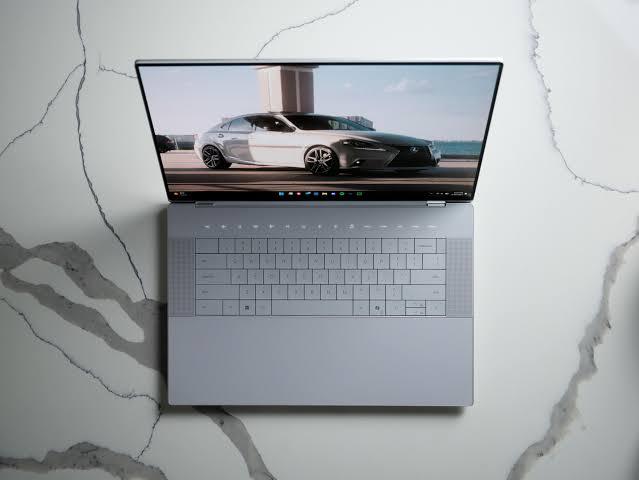
The XPS 16 9640 is Dell's first 16-inch entry in the XPS lineup, effectively taking over from the discontinued XPS 15. <cite index="4-1">It's the company's first 16-inch model, and it's every bit as stunning to behold as its smaller predecessors</cite>. The laptop leans into the same minimalist design language found across the rest of the XPS family: an edge-to-edge keyboard, a nearly invisible haptic touchpad, and capacitive touch-sensitive function keys instead of physical ones.
It's aimed at a broad audience professionals, content creators, students, and even light gamers who want a machine capable of handling everything from spreadsheets to 4K video editing without needing a dedicated workstation.
Design and Build Quality
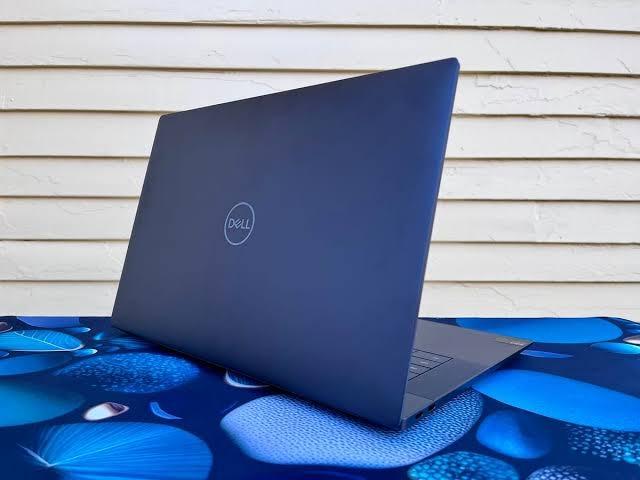
Dell didn't reinvent the wheel here, and that's mostly a good thing. <cite index="5-1">The platinum or graphite aluminum chassis is sleek and minimalist, reminiscent of a MacBook, while the prominent speaker grilles flanking the keyboard add a touch of visual interest</cite>. It's a laptop that feels premium the moment you pick it up, with a rigid frame that doesn't flex under normal use.
That said, the design isn't universally loved. The flat, capacitive function row and edge-to-edge glass touchpad while visually striking can take some getting used to, and a few reviewers have flagged the low-contrast keyboard as a minor ergonomic tradeoff for style.
Weight and thickness are reasonable for what's packed inside. According to one hands-on breakdown, the laptop measures roughly <cite index="8-1">0.74 inches thick and weighs about 4.7 pounds</cite>, which keeps it in "portable enough" territory despite housing a discrete GPU.
Display: The Star of the Show
If there's one feature that consistently earns the XPS 16 9640 praise, it's the screen. Dell offers two main display options:
-
A 1920 x 1200 IPS panel with a 120Hz refresh rate, aimed at everyday productivity and battery efficiency
-
A 4K+ (3840 x 2400) OLED touch panel aimed at creative professionals who need color accuracy and contrast
The OLED option, in particular, draws consistent praise. <cite index="2-1">In a color gamut test, the Dell XPS 16 (9640) produced 100% of sRGB, 89% of Adobe RGB, and 100% of P3</cite>, numbers that put it firmly in "professional creative work" territory. One reviewer summed up the OLED experience simply: <cite index="8-1">the 16.3-inch 4K OLED touch display delivers exceptional clarity, deep blacks, and vibrant colors, while its 90Hz refresh rate ensures smooth visuals for both creative and professional tasks</cite>.
The IPS variant is no slouch either, hitting <cite index="1-1">a maximum measured brightness of 479 nits in the middle of the screen</cite> in independent lab testing comfortably bright enough for most indoor and office environments.
Performance: CPU and GPU Options
The Dell XPS 16 9640 is built around Intel's Core Ultra "Meteor Lake" mobile processors, paired with NVIDIA's Ada Lovelace graphics chips. <cite index="1-1">This machine is powered by 28W Intel Meteor Lake CPUs, and the most powerful chip for the series is the Intel Core Ultra 9 185H</cite>. On the graphics side, buyers can configure the laptop with <cite index="1-1">NVIDIA Ada Lovelace GPUs up to the GeForce RTX 4070</cite>.
Specifically, the GPU lineup includes: <cite index="5-1">Intel Arc graphics, NVIDIA GeForce RTX 4050 (6GB GDDR6, 50W), NVIDIA GeForce RTX 4060 (8GB GDDR6, 50W), and NVIDIA GeForce RTX 4070 (8GB GDDR6, 60W)</cite>.
For everyday work, this hardware is more than capable. One hands-on tester summarized the experience of running a Core Ultra 7 chip with 32GB of RAM: <cite index="5-1">the Intel Core Ultra 7 processor and 32GB of RAM made quick work of demanding applications like virtual machines and Docker containers</cite>, without significant slowdowns even under multiple simultaneous workloads.
Cooling engineering also gets a nod from independent testers. <cite index="1-1">The CPU can sustain a 60W power limit plus a 3.0GHz P-core clock even in long periods of 100% stress</cite>, and <cite index="1-1">the two fans aren't noisy at all, and the keyboard isn't too hot to the touch even during gaming</cite> a solid result for a chassis this thin.
Memory is worth paying attention to before you buy, since it's soldered rather than user-upgradeable. <cite index="3-1">LPDDR5X is the memory standard on this machine, soldered to the motherboard, so it's important to think ahead when customizing your machine</cite>.
Ports and Connectivity
This is one area where the XPS 16 9640 draws consistent criticism. Dell prioritized a clean, minimalist look over connection flexibility. <cite index="4-1">You get three Thunderbolt 4 ports, divided between sides, with two on the left and one on the right. The right side also holds a 3.5mm audio jack and a MicroSDXC card reader</cite>. Notably, <cite index="4-1">there are no USB-A or HDMI ports</cite>, though Dell includes an adapter dongle in the box to bridge that gap.
On higher-end RTX 4070 configurations, the port layout shifts slightly: <cite index="4-1">one of the Thunderbolt ports is replaced with a USB-C 3.2 port</cite>, though thankfully it's positioned so you can still dock on either side of the laptop.
Wireless connectivity is up to date, with <cite index="1-1">Wi-Fi 7 support</cite> built in useful if you're future-proofing your home or office network.
Battery Life and Everyday Use
Battery performance on the XPS 16 9640 is respectable rather than exceptional, especially compared to ARM-based competitors. As one reviewer put it, <cite index="4-1">while ARM-powered laptops specifically Apple silicon models will likely have the edge for some time, there's still plenty of battery life here to get a solid day's work in</cite>. The tradeoff of a discrete GPU and a bright 4K OLED panel is that heavier, GPU-intensive tasks will drain the battery noticeably faster than on a lighter ultrabook.
Pricing and Configurations
Dell offers a wide configuration spread, which means the "right" price for you depends heavily on which specs matter most.
-
Entry-level configurations start around $1,499–$1,699, typically pairing a Core Ultra 7 155H with integrated Intel Arc graphics and a base IPS display
-
Mid-tier builds with an RTX 4060 or 4070, 32GB RAM, and 1TB storage tend to land between $2,499 and $3,399
-
Fully loaded configurations with the Core Ultra 9, RTX 4070, 4K+ OLED touch display, and maximum RAM/storage can climb as high as $4,289
For reference, one reviewer's test configuration <cite index="2-1">had a starting MSRP of $1,899, but the specific reviewed configuration carried an MSRP of $3,399</cite> a useful reminder that the sticker price can swing dramatically based on how you configure it.
Dell XPS 16 9640 vs. Lenovo P16 Gen 2
If the XPS 16 is a stylish all-rounder, the Lenovo P16 Gen 2 is its polar opposite in philosophy: a no-compromise mobile workstation built for engineers, architects, and 3D professionals.
The P16 Gen 2 <cite index="9-1">is based around 14th-generation Intel Core processors and features up to an NVIDIA RTX 5000 Ada Generation GPU, with support for up to 192GB of RAM and two storage drives</cite>. That's a significantly higher ceiling than the XPS 16 offers, particularly on memory and storage expandability.
Where the XPS 16 solders its memory in place, the ThinkPad takes the opposite approach. <cite index="14-1">One of the biggest reasons professionals choose the P16 Gen 2 is expandability</cite>, and reviewers note that <cite index="14-1">if you're someone who upgrades parts over time, this laptop is a dream compared to soldered, locked-down ultrabooks</cite>.
Performance-wise, the P16 Gen 2 punches hard in professional workloads. <cite index="16-1">The 130W TGP graphics option makes this one of the fastest 16-inch workstations in Lenovo's portfolio</cite>, though that power comes with tradeoffs: <cite index="16-1">temperature and fan noise are warmer and noisier than average as a result of the demanding GPU</cite>.
The compromises don't stop there. TechRadar's review flagged <cite index="15-1">a 6.5-pound weight, running hot under load, poor battery life, and the inability to charge via USB-C</cite> as the laptop's biggest drawbacks. So while the P16 Gen 2 wins decisively on raw workstation power and upgradability, it loses ground on portability, battery life, and everyday polish exactly where the XPS 16 9640 shines.
Bottom line: Choose the XPS 16 9640 if you want a stylish, well-rounded laptop for creative and professional work with occasional gaming. Choose the P16 Gen 2 if your job genuinely demands ISV-certified workstation performance, expandable memory, and you don't mind the extra bulk.
Where the Dell Precision 5690 Fits In
For readers comparing workstation-class alternatives directly within Dell's own lineup, it's worth mentioning the Dell Precision 5690. This is Dell's mobile workstation counterpart to the XPS 16, sharing a broadly similar chassis design philosophy but adding ISV certifications, workstation-grade NVIDIA RTX Ada GPUs, and business-focused support options. In fact, independent reviewers directly group it alongside the ThinkPad P16 Gen 2 as a rival: <cite index="16-1">competitors to the ThinkPad P16 Gen 2 include other high-performance 16-inch mobile workstations like the HP ZBook Power 16 G11 A or Dell Precision 5690</cite>.
In short, if the XPS 16 9640 is Dell's consumer-creator flagship, the Precision 5690 is the workstation sibling built for certified professional software and heavier sustained workloads worth a look if you need those certifications specifically.
Pros and Cons
Pros:
-
Stunning, premium aluminum design
-
Excellent 4K+ OLED display option with wide color gamut coverage
-
Strong CPU performance with well-managed thermals and quiet fans
-
Up to RTX 4070 graphics for creative work and light gaming
-
Wi-Fi 7 support for future-proofed connectivity
Cons:
-
Limited port selection no native USB-A or HDMI
-
Soldered, non-upgradeable RAM
-
Battery life trails ARM-based competitors under heavy load
-
Flat, capacitive function row may not suit everyone
-
Higher-end configurations get expensive quickly
Frequently Asked Questions
Is the Dell XPS 16 9640 good for gaming? It can handle many modern titles reasonably well, especially with the RTX 4070 configuration, but it's not built as a dedicated gaming laptop. Expect solid 1080p-1200p performance rather than maxed-out 4K gaming.
How much does the Dell XPS 16 9640 cost? Pricing ranges widely based on configuration, from roughly $1,499 at the entry level to over $4,000 for a fully maxed-out build with 4K OLED display, RTX 4070, and top-tier CPU/RAM.
Can I upgrade the RAM or storage later? Storage can typically be swapped via the single M.2 slot, but RAM is soldered to the motherboard and cannot be upgraded after purchase so choose your configuration carefully at checkout.
Is the Lenovo ThinkPad P16 Gen 2 better than the Dell XPS 16 9640? It depends on your priorities. The P16 Gen 2 offers more raw workstation power, upgradable RAM, and higher GPU ceilings, but it's heavier, runs hotter, and has weaker battery life. The XPS 16 9640 is the better all-around choice for portability and everyday polish.
What's the difference between the XPS 16 9640 and the Dell Precision 5690? The Precision 5690 targets professional users who need ISV-certified software compatibility and workstation-grade reliability, while the XPS 16 9640 is aimed at creators and general professionals who want a stylish, versatile machine.
Conclusion
The Dell XPS 16 9640 delivers a compelling mix of style, display quality, and performance that makes it one of the more well-rounded 16-inch laptops available today. Its OLED display option, solid thermal management, and premium build quality make it easy to recommend for creators and professionals who value design as much as raw power. Just go in aware of its tradeoffs limited ports, soldered memory, and middling battery life under heavy use.
If your workflow demands heavier-duty workstation performance with expandable memory, the Lenovo ThinkPad P16 Gen 2 or Dell's own Precision 5690 are worth serious consideration instead. But for most buyers who want a laptop that looks as good in a coffee shop as it performs in a home office, the XPS 16 9640 remains a strong pick.
Have you used the Dell XPS 16 9640, the Lenovo P16 Gen 2, or the Precision 5690? Share your experience in the comments below, and don't forget to share this article with anyone currently shopping for a new 16-inch laptop.

 Arabic
 French
 Spanish
 Portuguese
 Deutsch
 Turkish
 Dutch
Dutch
 Italiano
 Russian
 Romaian
 Portuguese (Brazil)
 Greek
Greek