


Dell 16 Plus Review: Specs, Price & Value 2026
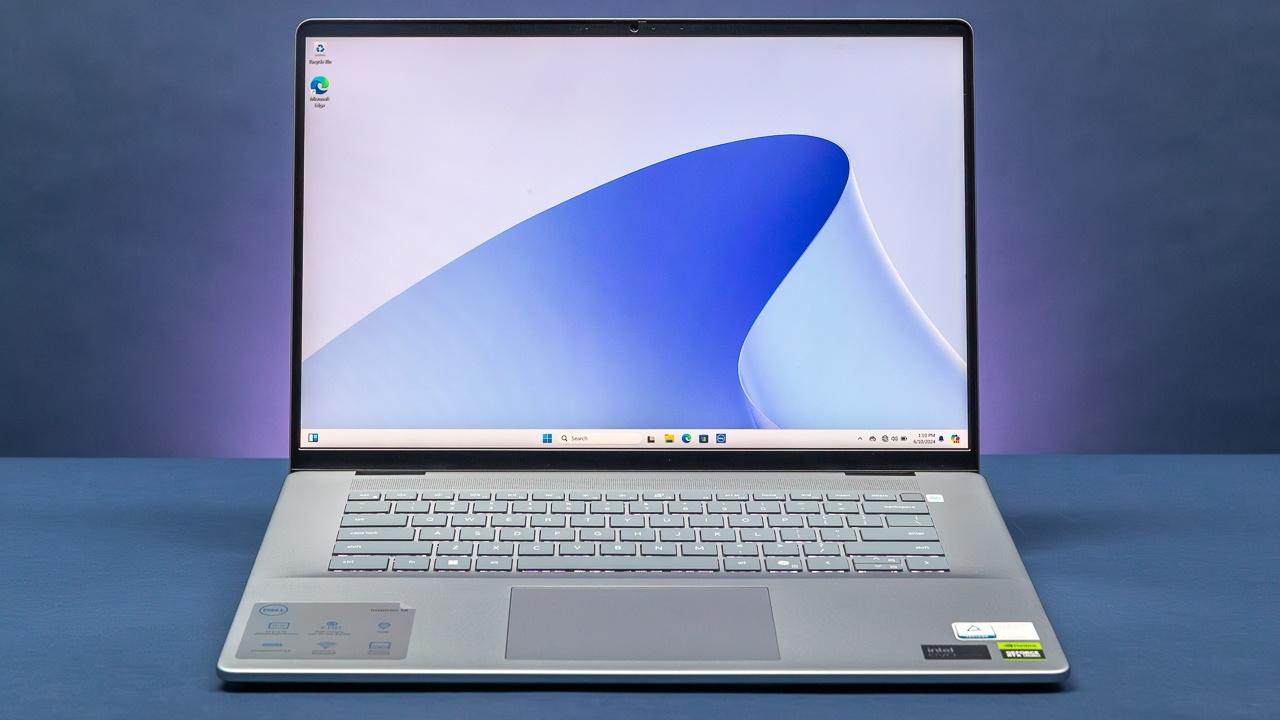
Dell 16 Plus Review: Is This 16-Inch Laptop Worth Buying in 2026?
If you're shopping for a spacious, everyday laptop that won't blow your budget, chances are the Dell 16 Plus has already popped up in your search results. It's one of the more talked-about entries in Dell's simplified lineup, and for good reason a big, bright screen, modern processors, and a price tag that regularly dips below $800.
But is it actually the right laptop for you, or should you be looking one rung up at something like the Dell Pro Max 16 Premium? In this guide, we'll break down everything you need to know: real specs, display quality, performance, battery life, pros and cons, and how the Dell 16 Plus stacks up against its pricier workstation-class siblings.
By the end, you'll know exactly who this laptop is built for and whether it deserves a spot on your desk.
What Is the Dell 16 Plus?
The Dell 16 Plus is part of Dell's streamlined consumer laptop range. In 2025, Dell folded its long-running XPS, Inspiron, and Latitude names into a single, simpler naming structure "Plus," "Pro," and "Pro Max" and the 16 Plus is the large-screen consumer option in that lineup. It's aimed at students, home users, and everyday professionals who want a roomy display for multitasking, streaming, and light creative work.
Depending on configuration, the Dell 16 Plus is available with either Intel Core Ultra (Series 2, "Lunar Lake") processors or AMD Ryzen AI 300 series chips, both of which include a neural processing unit (NPU) for on-device AI tasks and Copilot+ PC features in Windows 11. There's also a Dell 16 Plus 2-in-1 variant with a touchscreen that folds back into tablet mode.
Key Specifications at a Glance
-
Display: 16-inch options ranging from FHD+ (1920 x 1200) at 60Hz up to a sharper 2.5K (2560 x 1600) panel at 120Hz, both with Dolby Vision support
-
Processor: Intel Core Ultra 5/7/9 (Series 2) or AMD Ryzen AI 300 series
-
Graphics: Intel Arc integrated graphics (with select NVIDIA GeForce RTX discrete options on related Inspiron-generation models)
-
Memory: Up to 32GB of DDR5 or LPDDR5x RAM
-
Ports: USB 3.2 Gen 1, USB 3.2 Gen 2 Type-C with DisplayPort and Power Delivery, one Thunderbolt 4 port, HDMI 2.1, and a universal audio jack
-
Build: Aluminum lid and base with a plastic palm rest, 0.67 inches thick
-
Weight: Starting around 4.12 lbs (1.87 kg)
That combination of specs puts the Dell 16 Plus squarely in the mainstream, all-purpose laptop category not a gaming rig, not a mobile workstation, but a comfortable daily driver with a genuinely large canvas to work on.
Design and Build Quality
Dell didn't try to reinvent the wheel with the 16 Plus, and that's mostly a good thing. The chassis mixes aluminum on the lid and base with a matte-textured plastic palm rest, which keeps the weight and cost down without feeling cheap in hand. The hinge opens a full 180 degrees, so you can lay the laptop flat on a desk a small but genuinely useful touch for sharing your screen or presenting.
At 0.67 inches thick and roughly 4.1 pounds, it's not the lightest 16-inch laptop around, but it's reasonable given the larger footprint. The "Ice Blue" finish Dell ships it in leans more silver than blue under most lighting, which is a minor cosmetic note rather than a dealbreaker.
Display: The Real Selling Point
The screen is where the Dell 16 Plus earns its keep. The higher-tier configuration ships with a 16-inch, 2560 x 1600 IPS panel featuring a 120Hz refresh rate and an anti-glare coating a genuinely nice upgrade over the flat 60Hz panels you'll find on many laptops in this price bracket. Brightness tops out around 300 nits, which is fine indoors and holds up reasonably well outdoors thanks to the anti-glare treatment, even if it's not going to dazzle you in direct sunlight.
If you want a touchscreen, you'll need to specifically choose a configuration that offers one, or step up to the Dell 16 Plus 2-in-1, which adds a versatile hinge for laptop, tablet, and tent modes.
Performance and Everyday Use
Reviewers testing the Dell 16 Plus with an Intel Core Ultra 7 256V chip, 16GB of RAM, and Intel Arc 140V graphics found it delivers solid real-world performance for the price, particularly given that it uses Intel's current-generation Lunar Lake architecture rather than leftover previous-gen silicon many competitors still ship at this price point. Multithreaded workloads aren't its strongest suit, but for browsing, document work, spreadsheets, streaming, and light photo editing, it holds up comfortably.
The built-in NPU also unlocks Copilot+ PC features in Windows 11, including on-device AI tools for image generation, live captions and translation, and improved search useful additions if you plan to lean on Windows' AI features rather than cloud-based tools.
Battery Life and Ports
Battery life on the Dell 16 Plus is aimed at getting most users through a full day of mixed use email, browsing, video calls, and document editing though heavier workloads will predictably shorten that runtime. Port selection is reasonably well-rounded for a consumer laptop: a USB-A port, a USB-C port with DisplayPort and Power Delivery, one Thunderbolt 4 port, HDMI 2.1, and a headphone jack. It's not an abundance of connectivity, but it covers the essentials for most home and school setups.
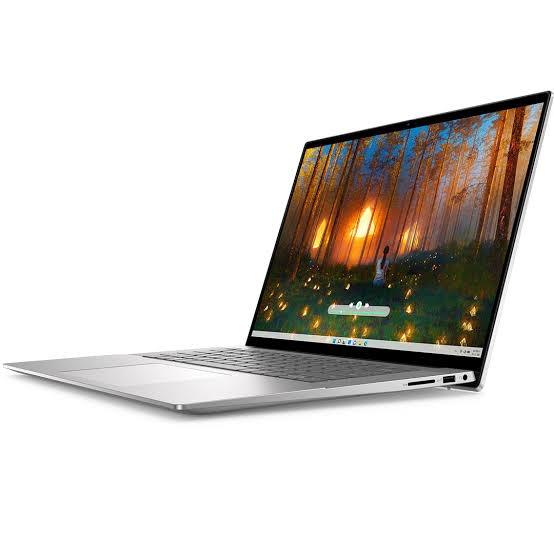
Dell 16 Plus vs. Dell Pro Max 16 Premium: What's the Real Difference?
This is where a lot of shoppers get confused, since both laptops share a 16-inch footprint. The truth is, they're built for very different jobs.
The Dell Pro Max 16 Premium is a mobile workstation, not a consumer laptop. It's built around Intel Core Ultra 7 255H, 265H (vPro Enterprise), or Ultra 9 285H processors, supports up to 64GB of LPDDR5x memory at 8400 MT/s, and can be configured with dedicated NVIDIA RTX PRO 1000, 2000, or 3000 "Blackwell" professional graphics a tier of GPU power the Dell 16 Plus simply doesn't offer. Display options go all the way up to a 4K UHD+ tandem OLED touch panel with 120Hz refresh, VESA DisplayHDR True Black 1000 certification, and 100% DCI-P3 color coverage, which matters enormously for video editors, 3D artists, and engineers who need color-accurate screens.
Connectivity is also a step up, with Thunderbolt 5 ports (80 Gbps) alongside Thunderbolt 4, plus MIL-STD 810H durability testing for rugged use. Unsurprisingly, that extra capability comes at a much higher price configurations of the Dell Pro Max 16 Premium regularly run well past $3,000, compared to the Dell 16 Plus, which frequently sells in the $700–$1,150 range.
In short: the Dell 16 Plus is for everyday computing on a big screen, while the Dell Pro Max 16 Premium is for professionals running CAD software, 3D rendering, video production, or AI development workloads that genuinely need workstation-grade graphics and memory.
Where the Dell Pro Max 14 Premium Fits In
For those who want Pro Max-level performance in a more portable shell, the Dell Pro Max 14 Premium is worth a look too. It shares the same workstation DNA and professional-grade build quality as its 16-inch sibling but in a smaller, lighter 14-inch chassis a solid option for professionals who travel often and want serious horsepower without carrying a larger machine. Independent benchmark testing has shown that graphics performance varies meaningfully between the 14-inch and 16-inch Pro Max Premium models depending on configuration, so if raw GPU throughput is your top priority, it's worth comparing specific configurations side by side before you buy.
Pros and Cons of the Dell 16 Plus
Pros:
-
Spacious, sharp 16-inch display with an optional 120Hz refresh rate
-
Modern Intel Lunar Lake or AMD Ryzen AI 300 processors with built-in NPU for Copilot+ features
-
Competitive pricing, especially during Dell's frequent sales
-
Solid aluminum-and-plastic build with a comfortable 180-degree hinge
-
Thunderbolt 4 support for fast data transfer and external displays
Cons:
-
Base configurations skip the touchscreen and higher-resolution display
-
Multithreaded performance trails some competitors at the same price
-
Starting weight of around 4.1 lbs makes it less travel-friendly than smaller ultrabooks
-
Limited port selection compared to workstation-class alternatives
-
Not designed for GPU-intensive creative or engineering work
Frequently Asked Questions
Is the Dell 16 Plus good for students? Yes. Its large display, dependable everyday performance, and accessible price make it a solid pick for coursework, research, note-taking, and streaming between classes.
Can the Dell 16 Plus handle gaming? It can run lighter or older titles reasonably well thanks to Intel Arc integrated graphics, but it isn't designed for demanding, graphics-intensive gaming. For that, you'd want a dedicated gaming laptop or a workstation-class machine with discrete graphics.
What's the difference between the Dell 16 Plus and Dell Pro Max 16 Premium? The Dell 16 Plus is a consumer laptop built for everyday tasks, while the Dell Pro Max 16 Premium is a mobile workstation with far more memory headroom, optional professional NVIDIA graphics, and a higher-end OLED display option aimed at demanding creative and technical workloads.
Does the Dell 16 Plus support touch input? Only select configurations, or the dedicated Dell 16 Plus 2-in-1 model, include a touchscreen. Standard configurations use a non-touch display.
Is the Dell Pro Max 14 Premium a better choice than the 16-inch model? It depends on your priorities. The 14 Premium trades some screen real estate and, in certain configurations, graphics headroom for a lighter, more portable chassis a worthwhile trade if you travel frequently with your workstation.
Final Verdict: Should You Buy the Dell 16 Plus?
The Dell 16 Plus earns its place as a dependable, well-priced laptop for anyone who wants a big screen without paying workstation prices. It's not trying to compete with the Dell Pro Max 16 Premium or Dell Pro Max 14 Premium on raw power and it shouldn't, since those machines serve a completely different, professional-grade audience. If your daily workload is browsing, streaming, schoolwork, spreadsheets, and general productivity, the Dell 16 Plus delivers real value, especially when you catch it on sale.
If, on the other hand, your work involves 3D rendering, video editing, CAD, or AI development, it's worth stretching your budget toward the Pro Max lineup, where the extra memory, graphics power, and display quality will actually pay for themselves.
Have you used the Dell 16 Plus, Pro Max 16 Premium, or Pro Max 14 Premium? Share your experience in the comments below, and if you found this guide helpful, pass it along to anyone shopping for their next laptop.

 English
 Arabic
 French
 Spanish
 Portuguese
 Turkish
 Dutch
Dutch
 Italiano
 Russian
 Romaian
 Portuguese (Brazil)
 Greek
Greek