Mental health providers dedicate their time to improving patients' emotional and psychological well-being. However, behind every successful therapy session, psychiatric evaluation, or counseling appointment is an administrative process that determines whether the practice gets paid accurately and on time. This is where mental health billing services play a vital role.
Mental health billing is different from general medical billing because it involves unique coding requirements, insurance limitations, authorization rules, and documentation standards. Even a small mistake can result in delayed reimbursements, denied claims, or compliance concerns.
Whether you operate a private therapy practice, a psychiatric clinic, or a multidisciplinary behavioral health center in the USA, understanding how professional billing services work can help improve your financial performance while allowing you to focus on patient care.
Why Mental Health Billing Is More Complex Than Other Specialties
Behavioral healthcare comes with billing challenges that are not commonly seen in many other medical specialties. Insurance companies often have strict guidelines regarding covered services, treatment duration, frequency of visits, and medical necessity.
Mental health providers frequently bill for services such as:
- Individual psychotherapy
- Family therapy
- Group therapy
- Psychiatric diagnostic evaluations
- Medication management
- Psychological testing
- Telehealth counseling
- Crisis intervention services
Each service requires accurate documentation and the correct combination of diagnosis codes and procedure codes. Missing even one required detail can lead to claim rejections.
Professional mental health billing services help practices navigate these complexities while maintaining compliance with payer requirements.
Common Billing Challenges Mental Health Practices Face
Many providers experience similar obstacles that affect cash flow and administrative efficiency.
Frequent Claim Denials
Claims may be denied because of:
- Incorrect patient information
- Missing prior authorization
- Invalid diagnosis codes
- Coding errors
- Incomplete documentation
- Insurance eligibility issues
Each denied claim requires additional work before payment can be received.
Changing Insurance Policies
Insurance companies regularly update their reimbursement policies. Staying informed about these changes requires continuous monitoring and staff training.
Documentation Requirements
Mental health documentation often requires detailed clinical notes that justify treatment plans and medical necessity. Proper documentation supports successful reimbursement and reduces audit risks.
Managing Telehealth Billing
Virtual behavioral healthcare has become increasingly common across the USA. Billing telehealth visits correctly requires knowledge of payer-specific rules, modifiers, and place-of-service requirements.
What Do Mental Health Billing Services Include?
Professional billing companies handle the financial side of healthcare so providers can spend more time treating patients.
Typical services include:
- Patient insurance verification
- Benefits eligibility checks
- Prior authorization support
- Charge entry
- Claim preparation and submission
- Payment posting
- Denial management
- Appeals processing
- Accounts receivable follow-up
- Financial reporting
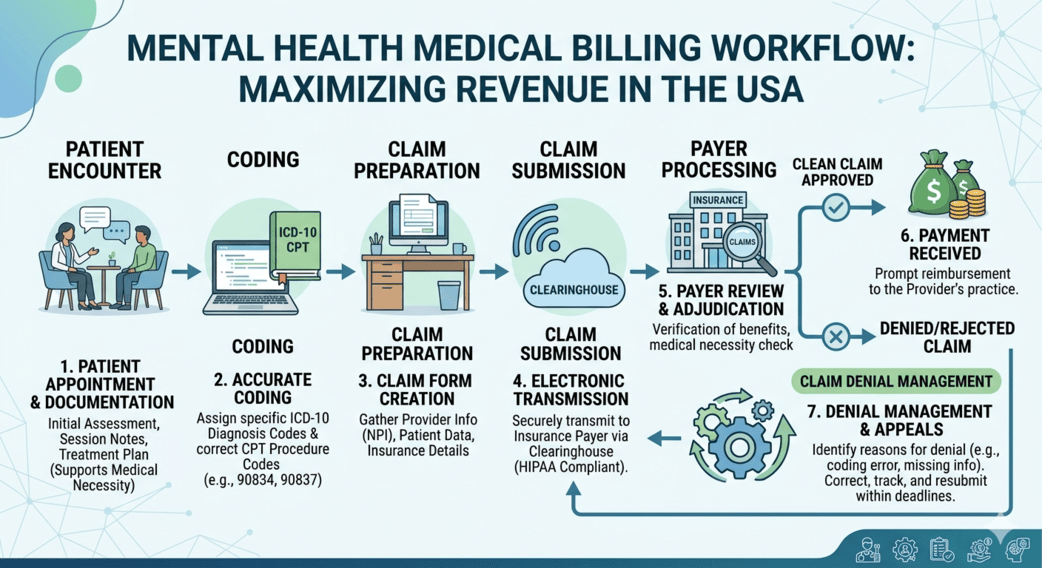
Many organizations also integrate revenue cycle management strategies that monitor every stage of the payment process, from patient registration to final reimbursement.
The Importance of Accurate Coding
Accurate coding directly affects reimbursement. Incorrect codes can result in denied claims, reduced payments, or compliance concerns.
Professional medical coding services help ensure that:
- Diagnosis codes match clinical documentation.
- Procedure codes accurately reflect services provided.
- Required modifiers are applied correctly.
- Coding follows current industry guidelines.
- Claims meet payer-specific billing standards.
Regular coding reviews also reduce the likelihood of repeated billing errors.
Benefits of Outsourcing Mental Health Billing
Many behavioral health practices choose to outsource billing instead of managing everything internally.
Better Cash Flow
Clean claims are more likely to be processed quickly, helping practices receive payments sooner.
Reduced Administrative Work
Office staff can focus on scheduling, patient communication, and daily operations instead of spending hours correcting denied claims.
Improved Compliance
Billing specialists stay updated on changing regulations, helping practices remain compliant with payer and industry requirements.
Lower Denial Rates
Experienced billing professionals identify errors before claims are submitted, reducing unnecessary rework.
Financial Transparency
Detailed reports provide insights into collections, outstanding balances, denial trends, and reimbursement performance.
How Credentialing Supports Successful Billing
Before providers can receive reimbursement from many insurance companies, they must complete the credentialing process.
Credentialing verifies a provider's:
- Professional licenses
- Education
- Certifications
- Clinical experience
- Practice information
Incomplete or outdated credentialing can delay insurance enrollment and prevent timely payments. Keeping provider information current helps avoid interruptions in reimbursement.
Choosing the Right Mental Health Billing Partner
Not every billing company understands the unique requirements of behavioral healthcare. When evaluating billing support, consider whether the provider offers:
Industry Experience
Look for experience with:
- Psychiatry
- Psychology
- Counseling
- Behavioral health
- Substance use treatment
Specialized knowledge often results in fewer billing mistakes.
Transparent Reporting
Reliable billing partners provide regular financial reports that clearly explain:
- Claim status
- Collection rates
- Denial reasons
- Outstanding receivables
- Payment trends
Compliance Knowledge
A qualified billing partner should understand healthcare regulations and maintain secure handling of patient information.
Responsive Communication
Questions about claims or insurance issues should be addressed quickly to avoid unnecessary delays.
Technology Is Improving Mental Health Billing
Modern billing systems help streamline administrative work while reducing manual errors.
Common technology features include:
- Electronic claim submission
- Automated eligibility verification
- Real-time claim tracking
- Electronic payment posting
- Secure document management
- Reporting dashboards
- Integration with electronic health records
Automation allows billing teams to identify issues earlier and improve claim accuracy.
The Role of Revenue Cycle Management in Behavioral Health
Billing is only one part of a larger financial process. Effective revenue cycle management focuses on improving every stage of patient revenue.
This includes:
- Patient registration
- Insurance verification
- Appointment scheduling
- Documentation review
- Coding accuracy
- Claim submission
- Payment collection
- Denial resolution
- Financial reporting
When every step works together efficiently, practices often experience stronger financial stability and fewer payment delays.
Supporting Growth Through Professional Billing
As behavioral healthcare demand continues to increase across the USA, many practices are expanding their services, adding providers, and offering virtual care. Administrative workloads grow alongside patient volume.
Reliable medical billing services help practices maintain operational efficiency while reducing billing-related stress. Combined with accurate medical coding services, organized credentialing, and effective revenue cycle management, providers can create a smoother financial workflow that supports long-term practice growth.
Organizations such as 247 Medical Billing Services assist healthcare providers by managing billing operations, helping improve claim accuracy, reducing administrative burdens, and supporting efficient reimbursement processes without taking focus away from patient care.
Frequently Asked Questions
1. What are mental health billing services?
Mental health billing services manage insurance claims, payment processing, coding support, denial management, and reimbursement activities for behavioral health providers, therapists, psychologists, psychiatrists, and counseling practices.
2. Why is mental health billing different from general medical billing?
Behavioral health billing involves unique therapy codes, detailed documentation requirements, payer-specific coverage rules, telehealth regulations, and authorization requirements that require specialized expertise.
3. How can billing services reduce claim denials?
Professional billing teams verify insurance eligibility, review documentation, apply accurate coding, monitor payer guidelines, and identify potential errors before claims are submitted.
4. What is the role of medical coding in mental health billing?
Accurate medical coding services ensure that diagnosis and procedure codes match clinical documentation, helping claims meet insurance requirements and reducing reimbursement delays.
5. Why is credentialing important for mental health providers?
Credentialing allows providers to enroll with insurance networks, making them eligible for reimbursement. Without proper credentialing, many claims cannot be processed successfully.
6. How does revenue cycle management improve financial performance?
Revenue cycle management strengthens every step of the payment process, from patient registration through final reimbursement, helping practices improve collections, reduce denials, and maintain healthier cash flow.
7. Should small behavioral health practices outsource billing?
Many smaller practices choose outsourced medical billing services because it reduces administrative workload, improves billing accuracy, provides access to experienced specialists, and allows providers to spend more time caring for patients.



 English
 Arabic
 Spanish
 Portuguese
 Deutsch
 Turkish
 Dutch
Dutch
 Italiano
 Russian
 Romaian
 Portuguese (Brazil)
 Greek
Greek