


The Future of Urban Development Strategies in the 21st Century
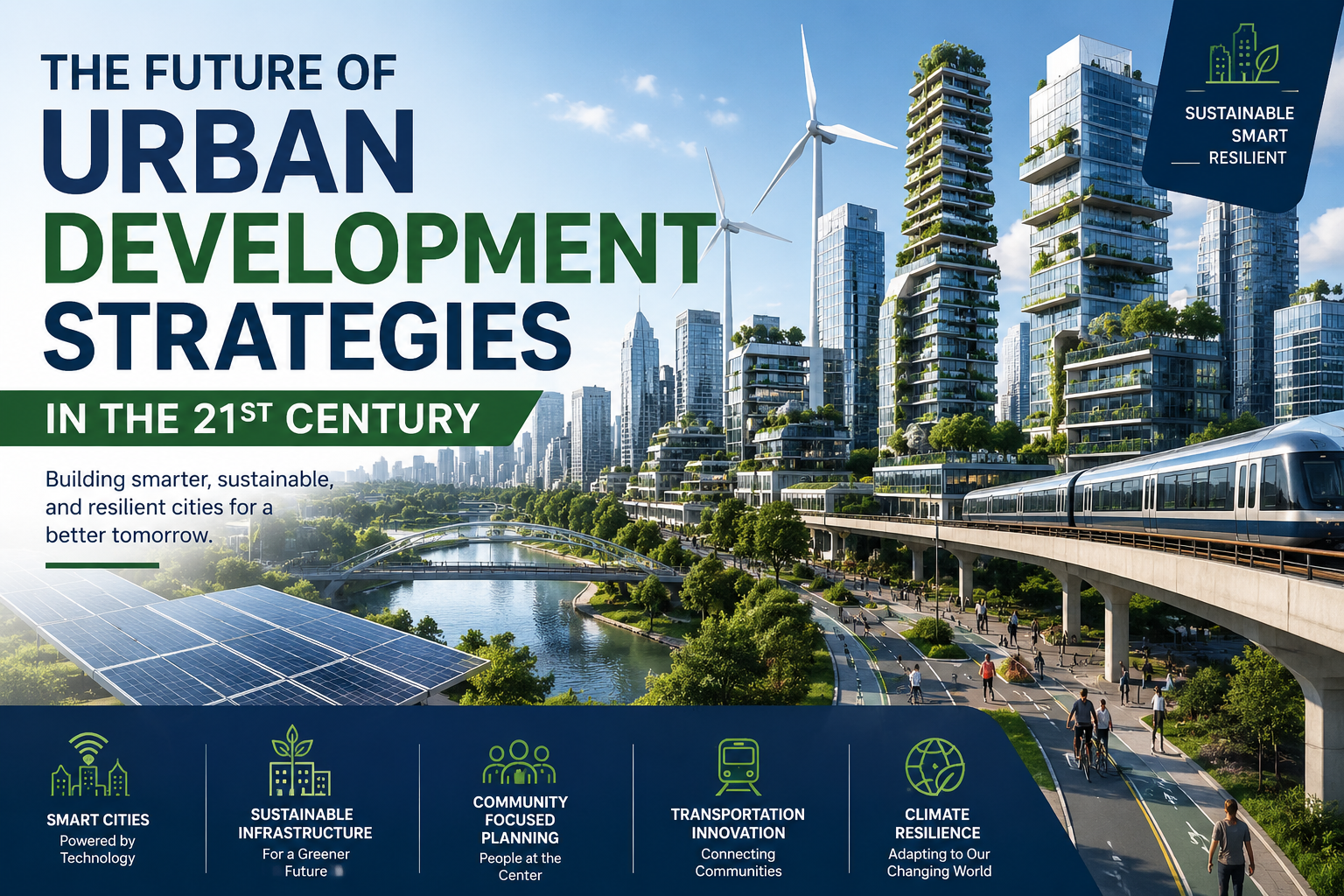
Cities around the world are evolving rapidly as populations grow and environmental challenges become more complex. Modern Urban Development Strategies are no longer focused solely on expanding infrastructure; they aim to create sustainable, resilient, and people-centered communities. The future of urban development will depend on innovative planning, smart technologies, and environmentally responsible solutions that improve quality of life while supporting economic growth.
Smart Cities and Digital Transformation
One of the most significant trends shaping urban development is the rise of smart cities. Advanced technologies such as the Internet of Things (IoT), artificial intelligence, and data analytics enable city planners to monitor traffic, energy consumption, and public services in real time. These technologies help reduce waste, improve efficiency, and enhance the overall urban experience for residents.
Smart transportation systems, intelligent street lighting, and automated waste management are becoming common features of modern cities. By leveraging digital tools, municipalities can make informed decisions and allocate resources more effectively.
Sustainable Infrastructure Development
Future urban development will prioritize sustainability in every aspect of planning and construction. Green buildings, renewable energy systems, and energy-efficient infrastructure are becoming essential components of modern cities.
Sustainable infrastructure reduces environmental impact while lowering long-term operating costs. Solar panels, rainwater harvesting systems, and eco-friendly building materials help cities conserve resources and reduce carbon emissions. These practices contribute to healthier environments and support long-term urban resilience.
Mixed-Use Development and Walkable Communities
The traditional separation of residential, commercial, and recreational areas is gradually being replaced by mixed-use developments. These communities combine housing, workplaces, retail spaces, and public amenities within accessible distances.
Walkable neighborhoods reduce dependence on private vehicles, lower traffic congestion, and encourage healthier lifestyles. Residents can access essential services more conveniently, creating vibrant and connected communities that foster social interaction and economic activity.
Climate Resilience and Environmental Protection
Climate change presents significant challenges for urban areas. Rising temperatures, flooding, and extreme weather events require cities to adopt resilient planning strategies. Future urban development will incorporate green infrastructure such as parks, urban forests, green roofs, and permeable pavements.
These solutions help manage stormwater, improve air quality, and reduce urban heat island effects. Integrating environmental protection into urban planning ensures that cities remain livable and adaptable in the face of changing climate conditions.
Community-Centered Planning
Successful urban development depends on understanding the needs of local communities. Future strategies will emphasize public participation and stakeholder engagement throughout the planning process.
Community-centered planning encourages residents to contribute ideas and feedback, ensuring that projects address real concerns and priorities. This collaborative approach creates more inclusive, equitable, and sustainable urban environments that reflect the needs of diverse populations.
Transportation Innovation
Transportation systems are undergoing significant transformation. Electric vehicles, shared mobility services, and improved public transit networks are reshaping how people move within cities.
Future urban planning will focus on creating integrated transportation networks that prioritize accessibility, efficiency, and sustainability. Dedicated cycling lanes, pedestrian-friendly streets, and advanced transit systems will help reduce congestion and support greener mobility options.
The Role of Engineering Innovation
Engineering innovations will continue to drive urban development in the 21st century. Advanced construction techniques, digital modeling, and sustainable design practices enable the creation of safer and more efficient infrastructure.
Engineers play a critical role in developing solutions that address population growth, environmental challenges, and changing community needs. Their expertise helps cities adapt to future demands while maintaining functionality and sustainability.
Conclusion
The future of urban development strategies lies in balancing technological advancement, environmental responsibility, and community well-being. Smart cities, sustainable infrastructure, climate resilience, and community-focused planning will shape the next generation of urban environments. By embracing innovation and sustainability, cities can create thriving communities that meet the needs of current and future generations.
FAQs
1. What are urban development strategies?
Urban development strategies are planning approaches used to improve cities through sustainable infrastructure, transportation, housing, and community development initiatives.
2. Why are smart cities important for the future?
Smart cities use technology and data to improve efficiency, reduce resource consumption, and enhance public services for residents.
3. How does sustainable infrastructure benefit urban areas?
Sustainable infrastructure reduces environmental impact, lowers operating costs, and supports long-term resilience against climate challenges.
4. What is a mixed-use development?
A mixed-use development combines residential, commercial, and recreational spaces within the same area to create convenient and walkable communities.
5. How can communities participate in urban development?
Residents can participate through public consultations, surveys, workshops, and stakeholder meetings to help shape local development projects.
Short Summary
The future of urban development strategies focuses on creating smart, sustainable, and resilient cities. Through advanced technology, green infrastructure, climate adaptation, and community engagement, urban planners can build cities that improve quality of life while addressing environmental and economic challenges.

 English
 Arabic
 Spanish
 Portuguese
 Deutsch
 Turkish
 Dutch
Dutch
 Italiano
 Russian
 Romaian
 Portuguese (Brazil)
 Greek
Greek