


How Automotive Digital Cockpits Are Redefining the Driving Experience
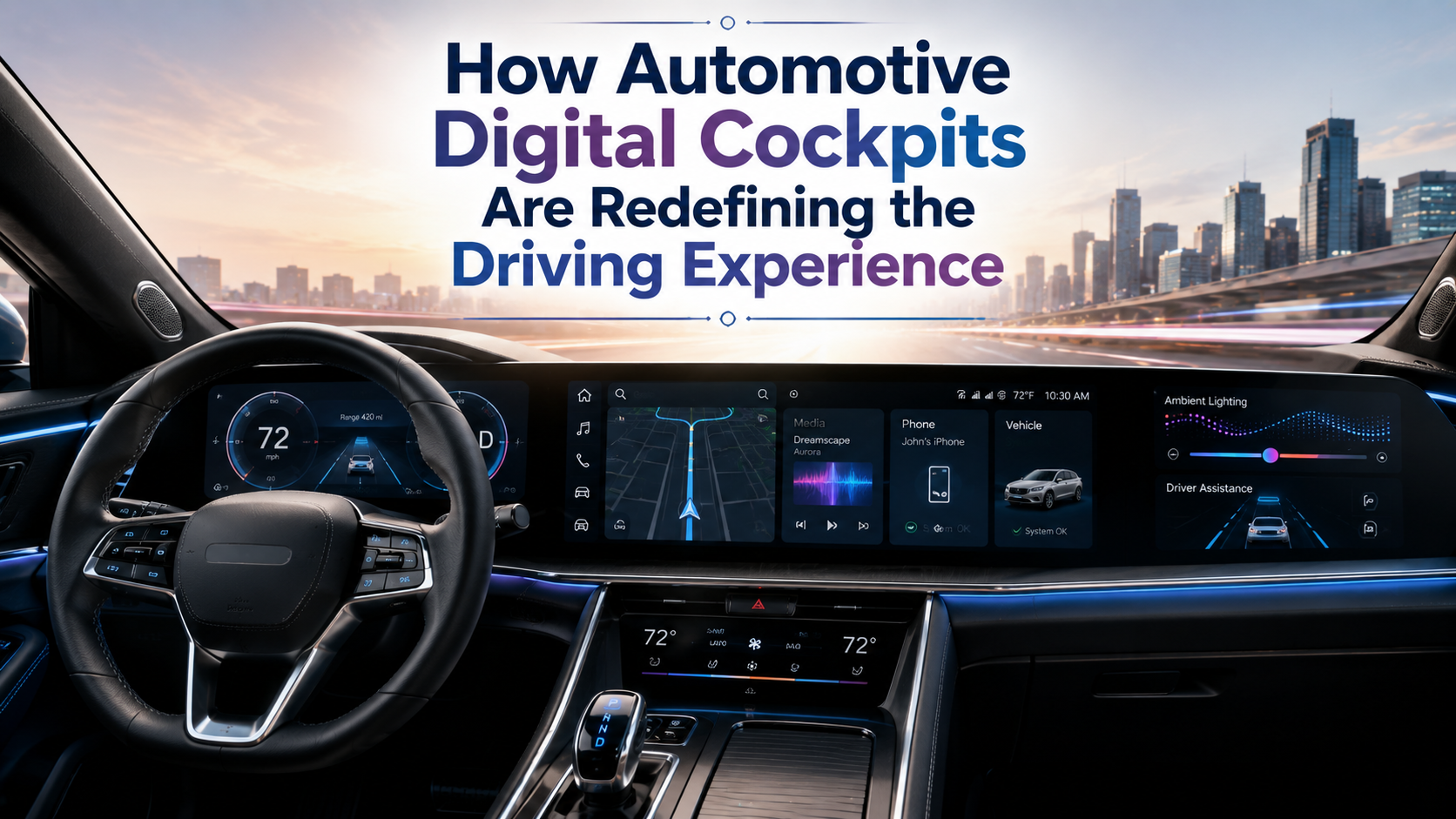
The automotive digital cockpit is transforming the way drivers and passengers interact with modern vehicles. Traditional analog dashboards are increasingly being replaced by integrated digital displays, advanced infotainment systems, and intelligent driver assistance interfaces. These connected ecosystems combine navigation, entertainment, vehicle diagnostics, and safety features into a unified platform, creating a more intuitive and personalized in-car experience.
Growing consumer expectations for seamless connectivity, along with rapid advances in artificial intelligence (AI), cloud computing, and display technologies, are accelerating the adoption of digital cockpit solutions. According to a Global Automotive Digital Cockpit industry analysis, the sector was valued at USD 24.13 billion in 2024 and is projected to reach USD 41.23 billion by 2030, expanding at a CAGR of 9.34% during 2025–2030. The increasing production of connected and software-defined vehicles is expected to remain a major catalyst for this growth.
The Rise of Connected and Intelligent Vehicle Cabins
Modern vehicles are evolving into digital mobility platforms where the cockpit serves as the central hub for communication and control. Advanced digital clusters, touchscreen infotainment displays, head-up displays (HUDs), and voice-enabled assistants provide drivers with real-time information while reducing distractions. These systems are increasingly integrated with smartphones, cloud services, and over-the-air software updates, ensuring that vehicles remain current with the latest features.
The adoption of connected vehicle technologies is also encouraging manufacturers to invest in sophisticated human-machine interface (HMI) solutions. Organizations such as the United Nations Economic Commission for Europe (UNECE) continue to promote vehicle safety and digital innovation through evolving automotive regulations, supporting the deployment of advanced in-cabin technologies.
How Digital Cockpits Enhance Safety and User Experience
One of the primary advantages of automotive digital cockpits is their ability to improve driver awareness and safety. Instead of relying on multiple disconnected systems, digital cockpits consolidate essential driving information into customizable displays. Navigation prompts, speed data, advanced driver assistance system (ADAS) alerts, and vehicle diagnostics can all be presented in a simplified and accessible format.
Camera-based driver monitoring systems are also becoming an important part of next-generation cockpit platforms. These technologies use sensors and AI-powered analytics to detect driver fatigue, distraction, or inattentiveness, helping reduce accident risks. Combined with voice recognition and gesture control, these solutions minimize the need for physical interaction with dashboard controls while driving.
As vehicle automation progresses, digital cockpits are expected to play a larger role in supporting semi-autonomous and autonomous driving functions. By integrating multiple information sources into a single interface, automakers can create a safer and more engaging driving environment.
Technology Trends Fueling Automotive Digital Cockpit Adoption
Rapid technological advancements are reshaping the automotive cockpit ecosystem. High-resolution OLED and TFT-LCD displays, augmented reality head-up displays, artificial intelligence assistants, and cloud-connected infotainment platforms are becoming increasingly common across premium and mid-range vehicle segments. These innovations enable richer visual experiences while improving operational efficiency and driver convenience.
The growth of electric vehicles (EVs) is another significant factor supporting demand for advanced digital cockpits. EVs typically rely on digital interfaces to display battery status, charging information, route optimization, and energy management data. As global EV adoption continues to rise, manufacturers are placing greater emphasis on creating intelligent and software-driven cabin environments.
The ISO 26262 functional safety standard also highlights the importance of developing reliable electronic and software systems for road vehicles. Compliance with such standards is encouraging the integration of advanced digital technologies that prioritize both functionality and operational safety.
Asia-Pacific Leads Innovation in Digital Cockpit Solutions
The Asia-Pacific region has emerged as a major hub for automotive digital cockpit development due to its strong automotive manufacturing base and increasing demand for connected vehicles. Countries such as China, Japan, and South Korea are investing heavily in electric mobility, intelligent transportation systems, and next-generation automotive electronics. As a result, automakers and technology suppliers across the region are rapidly introducing advanced cockpit platforms equipped with AI-enabled features.
Growing urbanization and rising consumer demand for premium vehicle experiences are further encouraging the adoption of integrated infotainment and driver assistance technologies. In addition, the expansion of 5G connectivity infrastructure is expected to strengthen vehicle-to-cloud communication capabilities, enabling more responsive and personalized cockpit systems.
Competitive Landscape and Future Outlook
The automotive digital cockpit ecosystem is characterized by collaboration between automotive manufacturers and technology companies specializing in semiconductors, displays, software platforms, and connectivity solutions. According to the MarkNtel Advisors study, leading participants in this industry include Aptiv, Continental AG, Denso Corporation, Faurecia, Harman International, Luxoft, Nvidia, Pioneer Corporation, Robert Bosch, and Visteon. These companies continue to invest in AI-powered interfaces, advanced display technologies, and integrated cockpit controllers to address evolving customer expectations.
Looking ahead, the shift toward software-defined vehicles is expected to reshape the future of automotive interiors. Digital cockpits will likely become even more adaptive, using artificial intelligence and predictive analytics to personalize settings, recommend navigation routes, and optimize vehicle performance. Integration with smart home ecosystems and cloud-based digital services may further enhance convenience and connectivity.
As consumer demand for safer, smarter, and more immersive driving experiences grows, automotive digital cockpits are set to become a defining feature of next-generation mobility. The convergence of connected technologies, advanced safety systems, and intelligent software platforms positions digital cockpits as a critical component in the evolution of the global automotive industry.

 English
 Arabic
 French
 Spanish
 Portuguese
 Deutsch
 Dutch
Dutch
 Italiano
 Russian
 Romaian
 Portuguese (Brazil)
 Greek
Greek