


What Makes It a Real Samurai Sword?
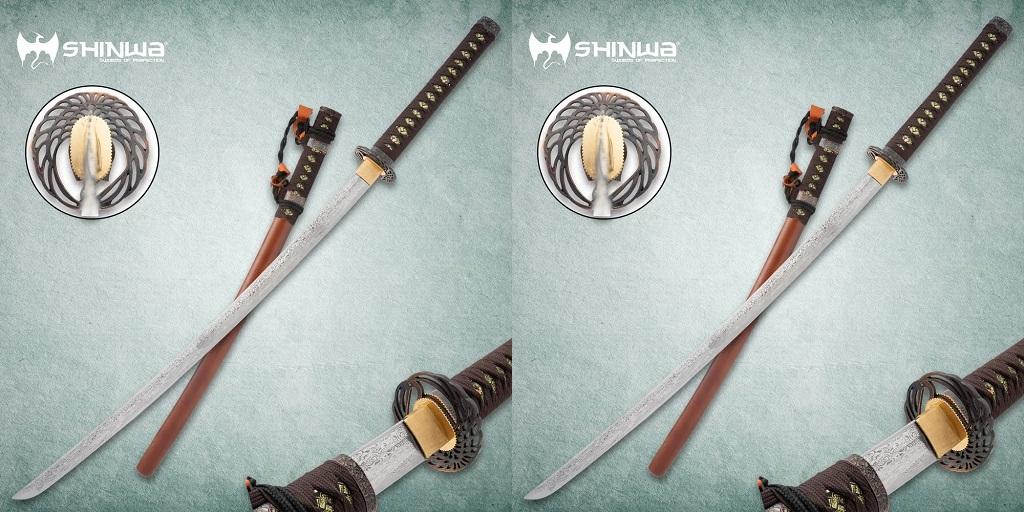
There are lots of wallhanger swords out there that are hardly useful for more than putting up on display, and that is true for many Japanese sword replicas, too.
So how can you tell if your katana or wakizashi is a “real” samurai sword? Here are just a few of the main things to look for.
- It’s made with a suitable steel alloy. Traditionally, Japanese swords were made with tamahagane, “jewel steel” or “precious steel” that was produced from satetsu, or iron sand. Some might say that to be a “real” samurai sword, one must still be made from tamahagane; others would concede that as long as the steel alloy was suitable for live practice, that’s good enough. Many modern Japanese swords are made from alloys such as T10 and 1095, and these are good steels.
- The steel is folded. Traditionally, Japanese swords are also made by folding steel. This improves the structure of the steel and helps drive out hammerscale and other impurities that can weaken the alloy. As a result any “real” samurai sword should be made in accordance with this process, but again, the more important thing is that a suitable grade of steel is used.
- It’s been clay tempered according to the yaki-ire process. Traditionally, Japanese swords were tempered using clay that produced a harder edge and a softer, more flexible, more abuse-resistant spine. Regardless of whether or not the sword has been clay tempered, it must be tempered so as to offer good edge retention paired with suitable toughness.
- It has a full tang (nakago). The tang is the portion of the sword that extends into the hilt. On any real sword, Japanese or Western or otherwise, a full tang is necessary. Without a full tang, the sword will lack the structural integrity to be used for live cutting practice, let alone to be used for martial arts or in combat.
- The tang is secured with a bamboo pin called a mekugi. Western swords had tangs that were either threaded onto or peened over the pommel. Japanese swords are different. In a Japanese sword like a katana, the tang is secured in the hilt (tsuka) with a small bamboo pin known as a mekugi. This makes it easier for the owner to disassemble the sword for cleaning, other maintenance, or storage.
- The hilt (tsuka) is wrapped in a samegawa. Traditional Japanese swords are made with special rayskin wraps known as a samegawa. The rayskin offered not just aesthetic appeal but also a non-slip grip that was more comfortable in the hand.
- It has a lacquered wood saya. Modern samurai swords may come with all different types of scabbards, but traditionally they were made from lacquered wood, and swordsmiths that honor tradition still make lacquered wood sayas for their blades.
Here for a Real Samurai Sword?
If you landed here in your search for a real samurai sword, the first place you should check is online at True Swords.
They carry an astounding array of battle ready Japanese swords, such as katana, wakizashi and odachi swords, along with other replica blade swords inspired by historical patterns.
While they do carry a wide range of replicas for displays, they also carry numerous excellent examples of battle-ready swords that exhibit the quality necessary for live cutting practice.
For more information about Axe Blade and Demon Slayer Black Sword Please visit: True Swords.

 English
 Arabic
 French
 Spanish
 Portuguese
 Deutsch
 Turkish
 Dutch
Dutch
 Russian
 Romaian
 Portuguese (Brazil)
 Greek
Greek