Business meetings are no longer limited to one office, one city, or one country. Today, companies work with international clients, remote employees, global partners, suppliers, consultants, and freelancers across different time zones. A manager may be in Pakistan, a client may be in Canada, a developer may be in Dubai, and a marketing team may be in the United Kingdom. Because of these time differences, scheduling business meetings can become confusing. This is where UTC now becomes very useful.
UTC stands for Coordinated Universal Time. It is the global time standard used around the world. When someone says UTC now, they mean the current time in UTC at this exact moment. For business meetings across countries, UTC works as one clear reference point that helps everyone understand the correct meeting time.
What Is UTC Now?
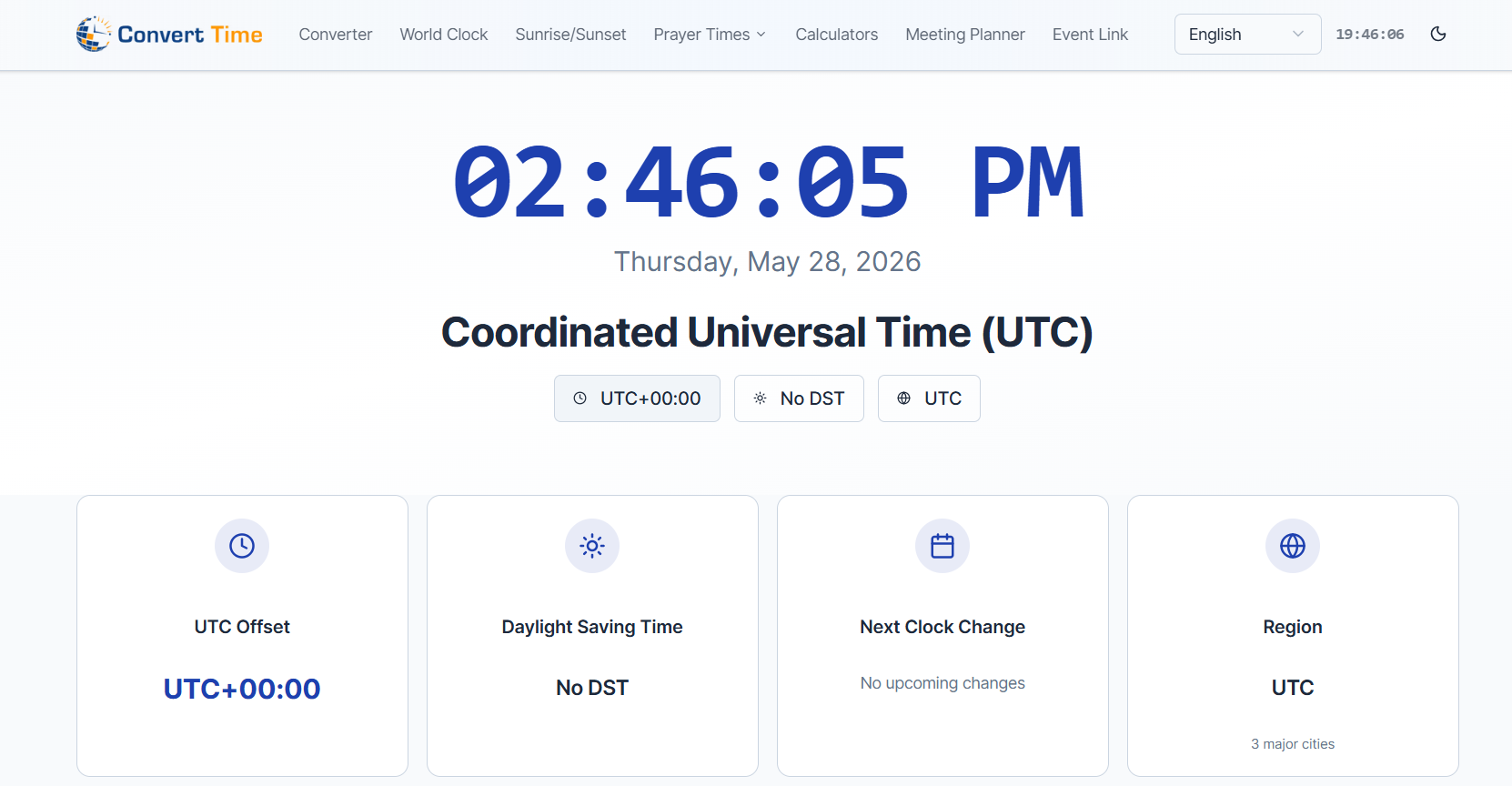
UTC now means the current time according to Coordinated Universal Time. It is not based on one country, city, or local region. Instead, it works as the standard time reference for the whole world.
Every local time zone is calculated by adding or subtracting hours from UTC. For example, Pakistan Standard Time is UTC+5, which means Pakistan is 5 hours ahead of UTC. If UTC now is 10:00 AM, then the local time in Pakistan is 3:00 PM.
If a location follows UTC-4, it means that place is 4 hours behind UTC. If UTC now is 10:00 AM, then the local time there is 6:00 AM.
This simple system helps businesses compare meeting times across countries more easily.
Why UTC Now Matters for International Meetings
International business meetings often include people from different time zones. If the meeting time is shared without a time zone, confusion can happen. For example, if someone says, “The meeting is at 4:00 PM,” others may not know whether that means Pakistan time, London time, Dubai time, New York time, or another local time.
When the time is written as 4:00 PM UTC, it becomes much clearer. Everyone can convert that time into their own local time zone.
UTC now matters because it gives every participant one fixed starting point. It helps avoid missed calls, late arrivals, wrong calendar entries, and unnecessary back-and-forth messages.
UTC Now Helps Avoid Time Zone Confusion
Time zone confusion is one of the biggest challenges in global business communication. Different countries follow different time zones. Some are ahead of UTC, while others are behind UTC. Some countries also use daylight saving time, which changes local clocks during certain months of the year.
UTC does not change for daylight saving time. It remains stable throughout the year. This makes it a reliable time standard for international meetings.
For example, New York may be UTC-5 during standard time and UTC-4 during daylight saving time. If a business team does not consider this change, the meeting time may be calculated incorrectly. Using UTC as the main reference helps reduce this risk.
How Businesses Can Use UTC for Meetings
Businesses can use UTC by writing meeting times clearly in invitations, emails, project management tools, and calendar notes. Instead of saying, “Meeting at 3:00 PM,” it is better to say, “Meeting at 3:00 PM UTC.”
For important meetings, it is also helpful to include local time conversions for major participants. For example:
Meeting time: 10:00 AM UTC
Pakistan: 3:00 PM
Dubai: 2:00 PM
London: 10:00 AM or 11:00 AM depending on the season
This makes the meeting invite easier to understand and reduces confusion for everyone.
UTC Now for Remote Teams
Remote teams depend heavily on accurate scheduling. A company may have employees working from Asia, Europe, North America, and Australia. Because team members may start and end their workdays at different times, UTC helps create a shared schedule.
For example, a weekly team meeting can be scheduled at 1:00 PM UTC. Each team member can convert that time into their own local time and attend accordingly.
UTC also helps remote teams manage daily standups, sprint planning, review calls, reporting meetings, and client updates. It creates consistency and keeps everyone aligned.
UTC Now for Client Meetings
Client meetings are very important in business. A missed or delayed client meeting can look unprofessional and may affect trust. When working with international clients, it is important to make the meeting time completely clear.
Using UTC helps avoid misunderstandings. For example, if you are working with a client in Canada while your team is in Pakistan, you can schedule the meeting in UTC and also provide both local times.
A professional message may look like this:
“Our meeting is scheduled for 2:00 PM UTC, which is 7:00 PM Pakistan time. Please confirm if this works for your local time zone.”
This shows clarity and professionalism.
UTC Now for Project Deadlines and Meeting Follow-Ups
Business meetings often include deadlines, follow-ups, and action items. If these deadlines are shared across countries, they should also be clear. Saying “send the report by Friday evening” can create confusion because evening happens at different times around the world.
A better option is to say:
“Please send the report by Friday, 5:00 PM UTC.”
This gives everyone the same exact deadline. It also helps managers track work more fairly across global teams.
UTC can also be used for meeting notes, follow-up emails, task assignments, and project milestones.
UTC Now and Calendar Tools
Calendar tools like Google Calendar, Outlook, and Apple Calendar can automatically convert meeting times into each user’s local time zone. However, UTC is still useful because it gives the official reference time.
When creating an international meeting, businesses can mention UTC in the event title or description. This makes it clear what the original meeting time is, even if calendar settings change.
For example, the calendar description can say:
“Official meeting time: 9:00 AM UTC.”
This helps avoid confusion if someone travels, changes device settings, or works from a different region.
UTC Now for Global Sales and Support Teams
Sales and support teams often communicate with customers from multiple countries. UTC helps them schedule calls, demos, onboarding sessions, and customer support meetings more accurately.
For example, a SaaS company may offer product demos to customers in different regions. By using UTC, the sales team can maintain a clean schedule and avoid overlapping calls.
Customer support teams can also list support hours in UTC so customers from any country can convert those hours into their local time.
UTC Now for Business Events
Businesses often organize webinars, product launches, investor meetings, training sessions, and online conferences. These events may include attendees from different countries.
Using UTC for event timing helps everyone understand when the event starts. For example:
Webinar starts at 4:00 PM UTC.
Participants can then convert this time into their local time zone. This helps increase attendance and reduces complaints about unclear timing.
Benefits of Using UTC Now for Business Meetings
The biggest benefit of UTC now is clarity. It gives all meeting participants one standard time reference.
Another benefit is consistency. UTC does not change for daylight saving time, which makes it more stable for international planning.
UTC also saves time. Instead of repeatedly asking, “What time is that for me?” participants can convert from one official UTC time.
It also improves professionalism. Clear meeting times show that your business understands global communication and respects other people’s schedules.
Conclusion
UTC now is very useful for business meetings across countries because it gives everyone one clear and reliable time reference. It helps businesses schedule meetings, manage remote teams, coordinate with clients, set deadlines, organize events, and avoid time zone confusion.
Local time is useful for daily life, but UTC is better for international business communication. It reduces mistakes, improves planning, and keeps global teams aligned.
In simple words, UTC now makes business meetings easier, clearer, and more professional. Whether your company works with clients, employees, or partners in different countries, using UTC can help everyone stay on the same schedule.



 English
 Arabic
 French
 Spanish
 Deutsch
 Turkish
 Dutch
Dutch
 Italiano
 Russian
 Romaian
 Portuguese (Brazil)
 Greek
Greek