


Data Analytics: Turning Data into Smart Decisions
In today’s digital age, businesses and organizations generate huge amounts of data every day. From online shopping and social media to banking and healthcare systems, information is constantly being collected and stored. However, raw data alone has little value unless it is analyzed properly. This is where Data Analytics becomes extremely important.
Data Analytics is the process of examining, organizing, and interpreting data to discover useful insights and support decision-making. It helps organizations understand patterns, identify trends, improve performance, and make smarter business decisions. Companies use data analytics to understand customer behavior, improve marketing strategies, increase efficiency, and predict future outcomes.
As technology continues to grow, data analytics has become one of the most important fields in modern business and technology. Organizations across different industries rely on analytics to gain competitive advantages and improve their operations.
What is Data Analytics?
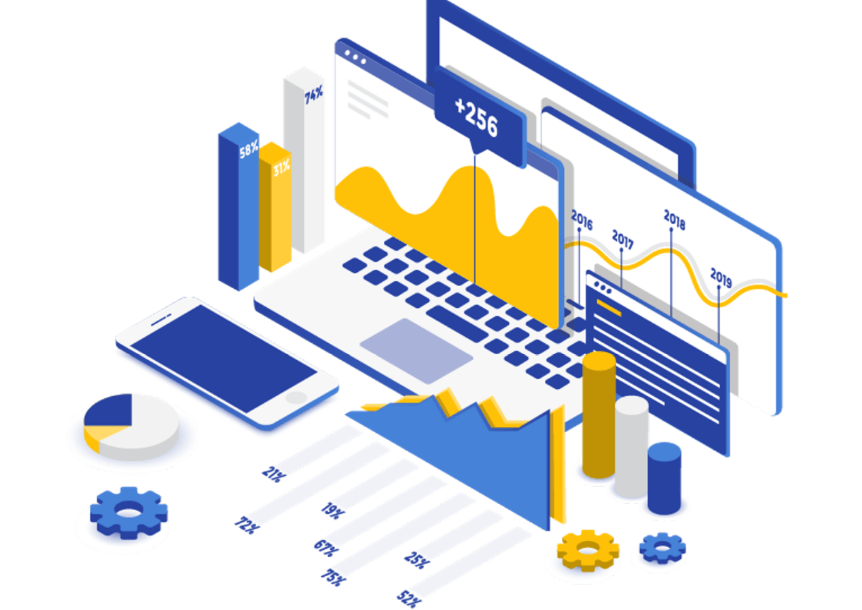
Data Analytics refers to the process of collecting, cleaning, analyzing, and interpreting data to extract meaningful information. It involves using statistical methods, software tools, and analytical techniques to identify trends and patterns within data.
The main goal of data analytics is to help businesses and organizations make informed decisions based on accurate information rather than assumptions.
Data analytics works with different types of data, including:
-
Structured data
-
Unstructured data
-
Quantitative data
-
Qualitative data
By analyzing data effectively, organizations can improve strategies, reduce risks, and identify growth opportunities.
Importance of Data Analytics
Data analytics has become extremely important because organizations generate massive amounts of information every day. Without proper analysis, this data cannot provide meaningful value.
One major advantage of data analytics is better decision-making. Businesses can analyze customer behavior, market trends, and operational performance to create smarter strategies and improve productivity.
Data analytics also helps organizations improve efficiency by identifying problems, reducing unnecessary costs, and optimizing processes. Companies can use analytics to understand customer preferences and provide personalized services.
Another important benefit is predictive analysis. Businesses can forecast future trends and make better plans using historical data and analytical models.
Because of these benefits, data analytics has become essential for modern businesses and digital transformation.
Types of Data Analytics
Data analytics is generally divided into different categories based on business requirements and analysis methods.
Descriptive Analytics
Descriptive analytics focuses on analyzing past data to understand what has happened. It helps organizations identify trends and patterns from historical information.
Diagnostic Analytics
Diagnostic analytics helps determine why something happened by analyzing relationships and identifying causes behind specific events or outcomes.
Predictive Analytics
Predictive analytics uses historical data, machine learning, and statistical models to predict future trends and outcomes.
Prescriptive Analytics
Prescriptive analytics provides recommendations and solutions for decision-making based on analyzed data and predictions.
These different types of analytics help organizations solve problems and improve strategies effectively.
How Data Analytics Works
Data analytics follows a systematic process to analyze information efficiently.
The first step is data collection, where information is gathered from multiple sources such as websites, databases, applications, and business systems.
After collection, the data is cleaned and organized to remove errors, duplicate entries, and unnecessary information. Clean data is essential for accurate analysis.
The next step is data analysis, where analysts use tools, algorithms, and statistical methods to identify patterns and trends.
Finally, the analyzed information is presented using reports, dashboards, charts, and visualizations so organizations can understand the results clearly and make informed decisions.
Technologies Used in Data Analytics
Data analytics depends on several technologies and tools for processing and analyzing information.
Programming languages such as Python and R are commonly used for analytics and data processing. SQL is important for managing and retrieving information from databases.
Data visualization tools such as Tableau, Power BI, and Google Data Studio help present information in a visual format for easier understanding.
Machine Learning and Artificial Intelligence are also used in advanced analytics to automate analysis and make predictions.
Cloud computing platforms support the storage and processing of large amounts of data efficiently.
Applications of Data Analytics
Data analytics is widely used in different industries and sectors.
In healthcare, analytics helps doctors analyze patient records, predict diseases, and improve treatment methods. Hospitals use analytics to improve efficiency and patient care.
Banks and financial institutions use data analytics for fraud detection, risk management, and customer analysis. Analytics helps improve security and financial planning.
E-commerce companies use analytics to understand customer behavior and recommend products based on user preferences. Marketing teams use analytics to measure campaign performance and improve strategies.
Educational institutions use analytics to track student performance and improve learning systems. Transportation companies use analytics for traffic management and route optimization.
Data analytics is also used in cybersecurity, sports, manufacturing, agriculture, entertainment, and social media platforms.
Advantages of Data Analytics
Data analytics offers several benefits for organizations and businesses.
One major advantage is improved decision-making. Organizations can make accurate and strategic decisions based on real information and insights.
Analytics also improves efficiency by identifying problems and optimizing business processes. Companies can reduce costs, increase productivity, and improve performance through data-driven strategies.
Another important benefit is customer understanding. Businesses can analyze customer preferences and provide personalized services and recommendations.
Key advantages of data analytics:
-
Better decision-making
-
Improved efficiency
-
Cost reduction
-
Predictive analysis
-
Enhanced customer experience
-
Increased business growth
These advantages make data analytics an essential part of modern business operations.
Challenges in Data Analytics
Despite its advantages, data analytics also comes with challenges.
One major challenge is handling large and complex data from multiple sources. Managing and analyzing such information requires advanced technologies and skilled professionals.
Data privacy and security are also major concerns because organizations often store sensitive user information. Protecting data from cyber threats and unauthorized access is extremely important.
Another challenge is maintaining data quality. Incomplete or inaccurate data can lead to poor analysis and incorrect decisions.
Organizations also need powerful systems and skilled experts to perform advanced analytics efficiently.
Skills Required for Data Analytics
Professionals working in data analytics require technical, analytical, and communication skills.
Important skills include:
-
Data analysis
-
Statistics and mathematics
-
Programming knowledge
-
Problem-solving abilities
-
Data visualization
-
Communication skills
Knowledge of tools such as Python, SQL, Tableau, and Power BI is highly important for data analysts.
Continuous learning is also necessary because technologies and analytical methods continue evolving rapidly.
Career Opportunities in Data Analytics
Data analytics has become one of the fastest-growing career fields in the technology and business industries. Organizations across different sectors require skilled professionals who can analyze data and provide valuable insights.
Popular career roles include:
-
Data Analyst
-
Business Analyst
-
Data Scientist
-
Business Intelligence Analyst
-
Marketing Analyst
-
Financial Analyst
Data analytics professionals are hired by technology companies, banks, healthcare organizations, e-commerce platforms, and multinational corporations.
Because of increasing digital transformation and data-driven business strategies, data analytics offers excellent career growth and high-paying opportunities.
Future Scope of Data Analytics
The future of data analytics is extremely promising because digital data continues to increase rapidly worldwide. Businesses are becoming more dependent on analytics for improving operations and decision-making.
Technologies such as Artificial Intelligence, Machine Learning, Big Data, and Cloud Computing are expected to further expand the importance of data analytics in the future.
Analytics will continue playing a major role in automation, customer intelligence, cybersecurity, healthcare innovation, and business growth.
As industries increasingly rely on data-driven technologies, the demand for skilled analytics professionals will continue to grow significantly.
Conclusion
Data Analytics has become one of the most important fields in the modern digital world. It helps organizations transform raw information into meaningful insights that support smarter decisions, innovation, and business growth.
From healthcare and finance to education and e-commerce, data analytics is improving efficiency and helping industries solve complex problems more effectively. Its ability to analyze information and predict future trends makes it highly valuable for businesses and organizations.
Although there are challenges related to data security and management, the advantages and future potential of data analytics are enormous. As technology continues to evolve, data analytics will remain a major driving force behind digital transformation and modern business strategies.
FAQs
1. What is Data Analytics?
Data Analytics is the process of analyzing and interpreting data to discover useful insights and support decision-making.
2. Where is Data Analytics used?
Data Analytics is used in healthcare, banking, marketing, education, e-commerce, cybersecurity, and many other industries.
3. What skills are required for Data Analytics?
Programming, statistics, data visualization, analytical thinking, and problem-solving skills are important for data analytics careers.
4. Is Data Analytics a good career option?
Yes, data analytics is one of the fastest-growing and highly demanded career fields in technology and business.
5. What is the future scope of Data Analytics?
The future of data analytics is very promising due to increasing digital data and growing demand for data-driven technologies.

 English
 Arabic
 French
 Spanish
 Portuguese
 Deutsch
 Turkish
 Italiano
 Russian
 Romaian
 Portuguese (Brazil)
 Greek
Greek