


How Are Wooden Medical Doors Actually Built?
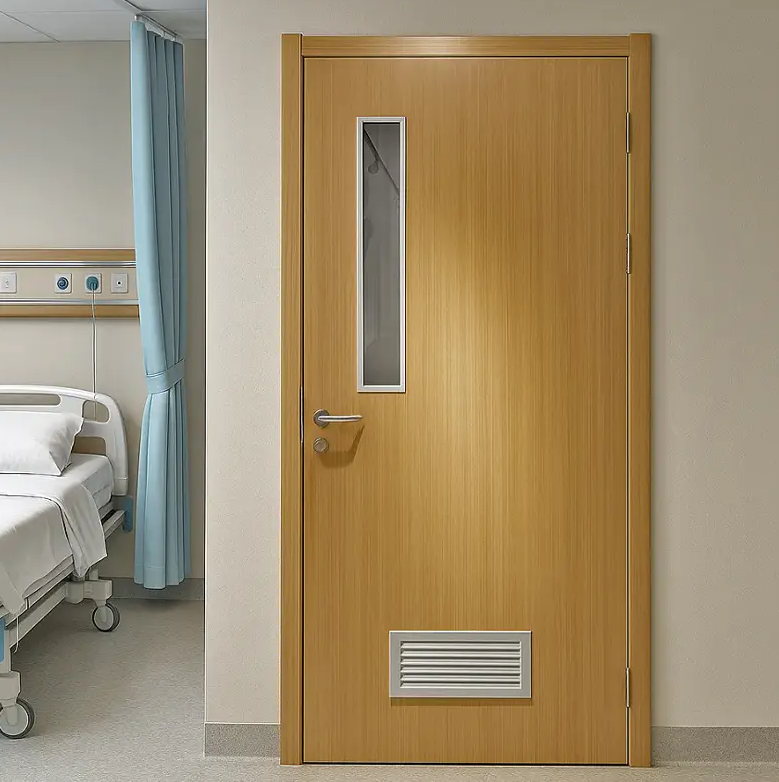
A wooden medical door looks straightforward from the outside. A panel, a frame, a handle, a closer. But the construction happening between those surfaces is considerably more involved than a standard interior door, and understanding what goes into one helps explain why they cost more and last considerably longer.
The core is where the real engineering lives. A medical-grade wooden door typically uses a solid or semi-solid engineered core rather than the hollow honeycomb found in budget commercial doors. Common core materials include particleboard, medium-density fibreboard, or specialist fire-resistant composites. For doors specified in high-risk areas — near theatres, intensive care units, or stairwells — an intumescent core is incorporated. This material expands when exposed to heat, sealing gaps in the door frame and slowing the passage of smoke and flame. The timber facing is applied around this engineered centre, giving the door its familiar appearance while the core does the structural and safety work.
The facing material on a wooden hospital door matters as much as what is underneath it. High-pressure laminate facings are widely used because they resist scratches, repel moisture, and tolerate the aggressive cleaning chemicals that healthcare environments demand. Some specifications call for genuine wood veneer over an engineered substrate — this gives the door a warmer, more natural aesthetic while still meeting hygiene and durability requirements. Either way, the edges of the door are usually sealed with a matching or contrasting hardwood lipping that protects the core from impact and moisture ingress at the most vulnerable points.
Hardware integration is another area where wooden medical doors differ from their domestic counterparts. Lever handles are standard — round knobs are inaccessible for patients with reduced hand strength or staff carrying equipment. Vision panels, where fitted, use Georgian wired glass or modern clear fire-rated glazing that maintains both the door's fire integrity and a line of sight into the room. Overhead door closers are almost universal, controlling the speed at which the door swings shut to prevent slamming while ensuring the door does not remain open inadvertently.

 English
 Arabic
 Spanish
 Portuguese
 Deutsch
 Turkish
 Dutch
Dutch
 Italiano
 Russian
 Romaian
 Portuguese (Brazil)
 Greek
Greek