


Why Geo Farming Is Reshaping Modern Real Estate Marketing
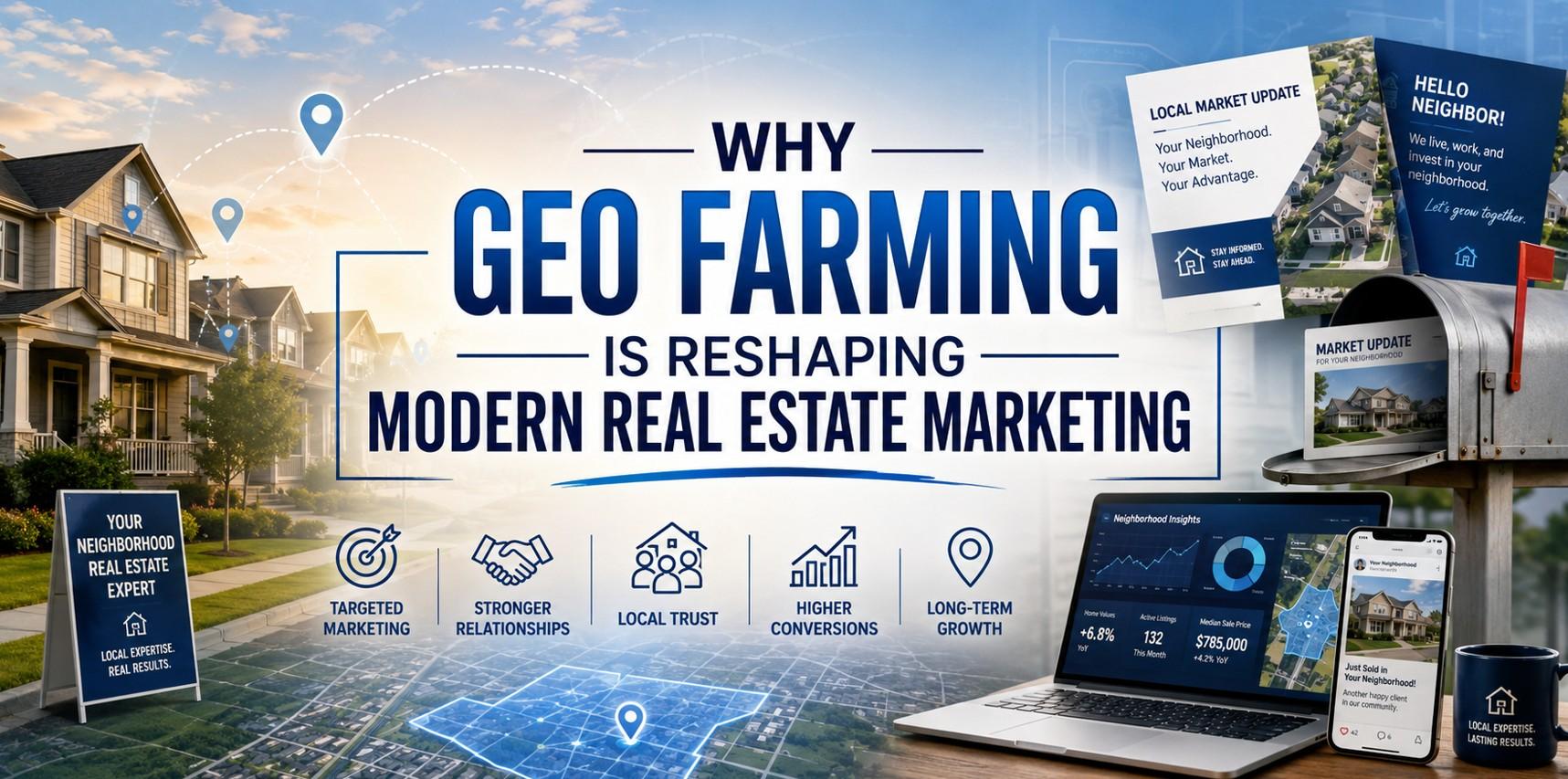
In today’s competitive property market, real estate professionals need more than broad advertising campaigns to generate consistent leads. Buyers and sellers expect local expertise, personalized communication, and market specific insights. This shift has made geo farming real estate one of the most effective strategies for agents and agencies looking to dominate a targeted area.
Geo farming refers to the process of focusing marketing efforts on a clearly defined geographic location to build brand recognition, trust, and long term relationships within a community. Instead of spreading resources across multiple neighborhoods, agents concentrate on becoming the recognized authority in one market.
For B2B real estate firms, brokerages, and property investment companies, geo farming is not simply a marketing tactic. It is a structured business growth strategy that improves visibility, increases referral opportunities, and strengthens local market positioning.
Understanding the Core of Geo Farming Real Estate
At its core, geo farming is about specialization. Real estate professionals identify a neighborhood, community, or district with strong transaction potential and consistently market to residents in that area.
This approach combines several activities, including:
-
Direct mail campaigns
-
Local market updates
-
Community involvement
-
Hyperlocal digital advertising
-
Property valuation outreach
-
Social media targeting
The goal is to establish familiarity over time. When homeowners think about buying or selling property, the agent who consistently appears in their local market becomes the natural first choice.
Unlike generic advertising, geo farming creates stronger engagement because the messaging is directly relevant to local residents and investors.
Why Geo Farming Works in Real Estate
The real estate industry depends heavily on trust and visibility. Clients prefer working with professionals who understand neighborhood pricing trends, buyer behavior, school districts, infrastructure development, and local investment opportunities.
Geo farming supports this trust building process in several ways.
Builds Local Authority
Agents who consistently provide neighborhood insights become recognized as market experts. This reputation can significantly improve conversion rates and referral business.
Improves Marketing Efficiency
Instead of spending marketing budgets on broad audiences, geo farming targets homeowners and investors within a selected area. This reduces wasted advertising spend and increases campaign relevance.
Creates Long Term Brand Recall
Repeated exposure through newsletters, postcards, events, and online campaigns helps build familiarity. In real estate, familiarity often leads to credibility.
Strengthens Community Relationships
Successful geo farming goes beyond promotion. It involves genuine community engagement. Supporting local events, sharing market reports, and participating in neighborhood initiatives helps establish meaningful relationships.
Choosing the Right Geographic Farm Area
Selecting the right location is critical for long term success. A poorly chosen farm area can limit lead generation opportunities, while a strategic market can deliver continuous business growth.
Several factors should be considered when identifying a geo farming territory.
Transaction Volume
Areas with healthy buying and selling activity provide more opportunities for lead conversion. Reviewing annual transaction data can help determine market potential.
Property Value
Higher property values generally translate into larger commissions. However, competition may also be stronger in premium neighborhoods.
Population Stability
Neighborhoods with moderate homeowner turnover often perform well because residents stay long enough to build relationships but still generate consistent listings.
Market Competition
Understanding how many agents already dominate an area is essential. Entering an oversaturated market may require larger marketing investments.
Digital Transformation in Geo Farming Real Estate
Technology has significantly enhanced geo farming strategies. Today’s real estate businesses can combine traditional outreach with advanced digital targeting tools to improve performance.
Digital platforms now allow agents to deliver personalized campaigns based on location, demographics, online behavior, and property ownership patterns.
Hyperlocal Advertising
Paid advertising platforms enable businesses to target users within specific postal codes or neighborhoods. This precision improves lead quality and campaign efficiency.
Data Driven Decision Making
Real estate analytics tools provide insights into homeowner behavior, listing trends, and investment activity. These insights help agents refine their outreach strategies.
Social Media Engagement
Localized social media content helps agents connect with communities in a more authentic way. Sharing neighborhood updates, property trends, and local success stories can increase engagement significantly.
CRM Integration
Modern customer relationship management systems allow businesses to track interactions, automate follow ups, and maintain consistent communication with leads.
Common Challenges in Geo Farming
While geo farming offers strong long term value, it requires patience and consistency. Many real estate professionals fail because they expect immediate results.
Consistency Is Essential
Building recognition within a neighborhood takes time. Sporadic marketing efforts rarely produce meaningful outcomes.
Budget Management
Geo farming often requires continuous investment in mail campaigns, digital advertising, and local branding activities.
Competitive Markets
Established agents may already have strong visibility in certain areas. New entrants must differentiate themselves through better service, stronger market insights, or more engaging communication.
Measuring ROI
Tracking campaign effectiveness can be difficult without proper analytics systems. Businesses should monitor lead sources, conversion rates, and customer engagement regularly.
Best Practices for Successful Geo Farming
To maximize results, real estate businesses should focus on delivering value rather than aggressive sales messaging.
Maintain consistent branding across all communication channels. Use localized market reports and neighborhood insights to position your business as a trusted advisor instead of simply a service provider.
Combining offline and online marketing creates a stronger presence. Printed materials build familiarity, while digital channels increase visibility and engagement.
Community participation also plays a major role. Sponsoring local activities or collaborating with nearby businesses can strengthen credibility within the target area.
Most importantly, businesses should approach geo farming as a long term investment strategy rather than a short term lead generation campaign.
The Future of Geo Farming Real Estate
As consumer expectations continue evolving, hyperlocal expertise will become even more important in the real estate industry. Buyers and sellers increasingly prefer professionals who understand neighborhood dynamics and can provide personalized guidance.
Artificial intelligence, predictive analytics, and location based marketing technologies are expected to make geo farming even more sophisticated in the coming years. Businesses that combine local relationship building with advanced digital strategies will likely gain a significant competitive advantage.
For real estate agencies, brokerages, and investment firms, geo farming represents more than targeted marketing. It is a scalable strategy for building trust, improving brand authority, and generating sustainable growth within competitive property markets.
FAQs
What is geo farming in real estate?
Geo farming in real estate is a marketing strategy where agents focus on a specific geographic area to build brand recognition, generate leads, and establish local market authority.
How long does geo farming take to produce results?
Most geo farming campaigns require consistent effort for at least six to twelve months before delivering significant results. Long term consistency is essential for success.
Is geo farming suitable for small real estate agencies?
Yes. Small agencies can benefit greatly from geo farming because it allows them to compete effectively within a focused market instead of targeting large regions with limited resources.
What marketing channels are most effective for geo farming?
A combination of direct mail, social media marketing, local events, email campaigns, and hyperlocal digital advertising typically produces the best results.

 English
 Arabic
 Spanish
 Portuguese
 Deutsch
 Turkish
 Dutch
Dutch
 Italiano
 Russian
 Romaian
 Portuguese (Brazil)
 Greek
Greek