


How to Break In a Women's Leather Motorcycle Vest the Right Way
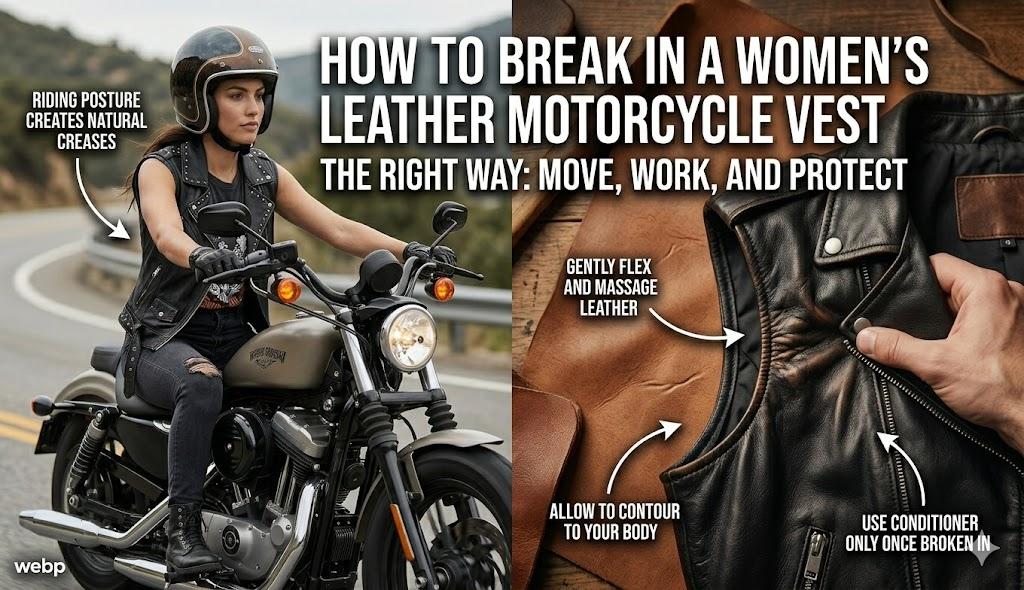
You just bought a women's leather motorcycle vest and it feels like armor. The leather barely bends, the shoulders feel stiff, and moving your arms takes effort. That's actually a good sign, it means you bought quality leather, not cheap processed stuff that feels soft because it's thin.
But now you need to break it in without ruining it. Women's bodies shape differently than men's, which means your vest needs to mold to curves, bust, and waist in ways a men's vest doesn't. Rush the process or use the wrong methods, and you'll crack the leather or ruin the fit.
Here's exactly how to break in leather motorcycle vests for women the right way, so they conform to your body without damage.
Why Women's Vests Break In Differently
A top quality women's leather motorcycle vest has shaping through the bust and waist that men's vests don't. When breaking in, the leather needs to:
-
Conform around the bust without stretching too much
-
Follow the natural curve of your waist
-
Mold to narrower shoulders
-
Adjust to a shorter torso length
Men can get away with generic break-in advice. Women need specific techniques that respect these differences, or the vest will develop weird creases, pull in the wrong places, or lose its shape.
The Safe Break-In Timeline
Plan on 4-8 weeks for a proper break-in. Thicker leather takes longer. Buffalo leather can take 10-12 weeks. There's no safe way to rush this dramatically.
Anyone telling you to soak it, heat it, or run over it with your bike is giving you advice that destroys leather. Ignore them.
Week-by-Week Break-In Process
Week 1: Indoor Wear Only
Don't start by riding 200 miles in a stiff vest. Wear it around your house for 2-3 hours daily while doing normal activities:
-
Watching TV
-
Cooking (nothing that involves grease splatter)
-
Light cleaning
-
Working at your desk
Move your arms naturally. Reach for things. Bend and stretch. You're teaching the leather how your body moves.
The vest will start softening where you move most—shoulders, armholes, and across the back when you lean forward.
Week 2: Light Conditioning
After a week of wear, apply your first round of conditioner. Use quality leather conditioner made for garments:
-
Lexol Leather Conditioner
-
Bickmore Bick 4
-
Chamberlain's Leather Milk
Apply a thin layer with a clean cloth. Let it soak in for 20-30 minutes, then buff away excess. The leather should feel slightly moist but not greasy. This keeps the leather supple while you're working it. Dry leather cracks when stressed.
Week 3-4: Start Riding
Take short rides, 20-30 minutes at first. The riding position naturally works the leather where it needs to flex. Wind pressure also helps the vest conform to your body shape. Pay attention to how it feels in riding position. If certain areas pull uncomfortably, spend extra time conditioning those spots.
Month 2: Regular Wear
By now your vest should feel noticeably different. Keep wearing it regularly. The break-in continues, just more gradually. Condition every 4-6 weeks during heavy break-in. Once fully broken in, drop to 2-3 times yearly.
What Never to Do
Don't Soak Your Vest
Water breaks down leather's natural oils and structure. When it dries, the leather becomes brittle and prone to cracking.
I've heard people say "wear it in the shower and let it dry on you for a custom fit." This ruins leather. Don't do it.
Skip the Heat
No hair dryers, radiators, or leaving it in direct sun to "soften it up." Heat dries leather fast, causing permanent damage.
Your body heat during wear is fine. External heat sources are not.
Avoid Household Products
Don't use:
-
Motor oil (breaks down leather fibers)
-
Olive oil or cooking oils (go rancid and smell terrible)
-
WD-40 (dries leather out)
-
Mink oil (too heavy, permanently darkens)
-
Saddle soap on finished leather (too harsh)
Use actual leather conditioner made for garment use. It costs $15 and lasts years.
Special Considerations for Plus Size Vests
Breaking in a plus size women's leather motorcycle vest requires extra attention.
Focus on High-Stress Areas
Larger vests put more stress on:
-
Shoulder seams
-
Bust area shaping
-
Side laces or closures
-
Armhole edges
Check these areas weekly during break-in. If you see stress marks or excessive creasing, you might need professional stretching or the vest is too small.
Don't Force Tight Fits
If the vest is so tight you can barely zip or button it closed, don't try to break it in. You either bought too small or your measurements changed.
Forcing tight leather creates permanent stretch marks and weakens seams. Return it and size up, or have it professionally altered.
Extra Conditioning
More leather surface area means more material to keep supple. Condition plus size vests slightly more frequently during break-in—every 3-4 weeks instead of every 6.
Women-Specific Break-In Tips
Bust Area Patience
The bust area on women's leather motorcycle vests takes longest to break in properly. Even if the chest measurement is correct, the leather hasn't conformed to your specific shape yet.
Don't try to stretch this area artificially. Wear the vest buttoned or zipped during break-in so it molds correctly. Leaving it open teaches the leather the wrong shape.
Waist Shaping
If your vest has waist shaping, it needs to curve with you. This happens naturally over time as you wear it.
Sitting and standing repeatedly helps the leather learn where to bend at your waist. Do this during your indoor wear sessions.
Shoulder Adjustment
Women's shoulders are narrower and more sloped than men's. If the vest feels stiff across the shoulders, gentle rolling exercises help:
Roll your shoulders forward and back while wearing the vest. Do arm circles. This works the shoulder area without overstretching.
The Movement Method (Speed Up Safely)
Want to accelerate break-in slightly without damage? Increase movement.
Active Wear Sessions
Wear your vest during:
-
Yard work
-
Washing your car or bike
-
Light exercise (yoga, stretching)
-
Walking or hiking
More movement equals faster break-in. Just keep sessions under 3 hours to prevent soreness.
The Rolling Technique
When not wearing the vest, gently roll it like a sleeping bag. This works the leather without forcing it.
Unroll, flip over, and roll from the other direction. Do this daily for the first two weeks. Takes 30 seconds and helps considerably.
Signs Your Vest Is Fully Broken In
You'll know it's done when:
-
The leather moves with you instead of resisting
-
You can put it on without thinking about adjustments
-
The bust and waist areas feel naturally shaped
-
High-movement areas (shoulders, armholes) feel soft
-
You forget you're wearing it
This is when you shift to maintenance mode, condition 2-3 times yearly and enjoy your perfectly fitted vest for years.
Maintenance During Break-In
Weekly Checks
Look for:
-
Stress cracks forming (means too tight or too dry)
-
Color changes or blotching (uneven conditioning)
-
Loose stitching (catch early)
-
Excessive creasing in one spot
Catching problems early prevents major issues.
Keep It Clean
Brush off dirt after each wear with a soft horsehair brush. Clean leather breaks in better than grimy leather.
The Bottom Line
Breaking in a women's leather motorcycle vest takes patience, but do it right and you'll have gear that fits like it was made for your body, because after proper break-in, it basically is.
Wear it regularly, condition it properly, and give it time. In two months, you'll have a vest that moves with you, looks great, and will last for decades.

 English
 Arabic
 French
 Spanish
 Portuguese
 Turkish
 Dutch
Dutch
 Italiano
 Russian
 Romaian
 Portuguese (Brazil)
 Greek
Greek