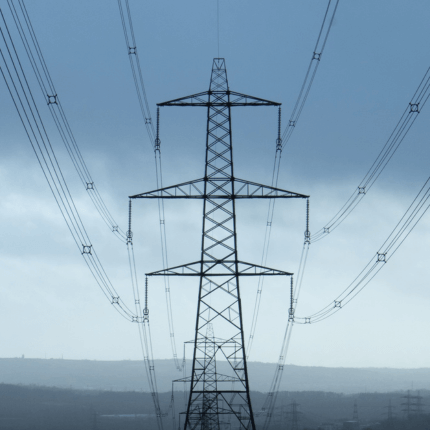
When people talk about power transmission structures, one component quietly does a lot of heavy lifting without much attention. The Cross Arm sits there, holding conductors in place, keeping spacing right, and making sure the whole structure behaves the way it should. It looks simple at first glance. Just a horizontal member fixed to a tower or pole. But once you start understanding its role, it’s clear that choosing the wrong one can create problems that show up years later, sometimes in the worst possible way.
A lot of engineers don’t realize this early on. Or maybe they do, but the focus often goes to towers, conductors, or insulators. The cross arm? It gets treated like a supporting actor. That mindset needs correction.
Why Cross Arm Selection Actually Matters
A cross arm is not just a piece of metal or composite bolted onto a structure. It carries mechanical loads, supports electrical clearance, and deals with environmental stress all at once. Wind pressure, conductor tension, temperature variation, even pollution in the air—all of it interacts with this one component.
If the cross arm fails, the consequences don’t stay local. It affects the entire line section.
There’s a report from the Central Electricity Authority that pointed out how structural component fatigue contributes to a noticeable percentage of transmission line outages. Not always dramatic collapse. Sometimes it starts small. A slight bend. A weakened joint. Then things escalate.
So yes, the choice matters more than it appears.
Material Choices: Not Just About Strength
Let’s talk materials for a moment. Steel has been the traditional option for years. Strong, predictable, easy to fabricate. But it comes with its own baggage—mainly corrosion.
In coastal or industrial regions, steel cross arms need proper galvanization. And even then, maintenance becomes part of the lifecycle. Ignore that, and deterioration starts creeping in quietly.
Then there are composite cross arms. Lighter. Resistant to corrosion. Easier to handle during installation. Sounds perfect, right? Not entirely.
Composites behave differently under long-term loading. They don’t “fail loudly” like steel. Instead, degradation can happen internally. That’s why quality control and testing standards matter more here than in conventional materials.
Aluminium also enters the conversation sometimes. Good strength-to-weight ratio. But again, cost and specific application decide whether it makes sense.
So the real question isn’t which material is best. It’s which material fits your environment and load conditions without creating future headaches.
Load Handling Isn’t Just a Calculation
On paper, load calculations look clean. You factor in conductor weight, wind load, safety margins, and you get your design numbers. But real life is rarely that neat.
Wind doesn’t always behave predictably. Ice loading in certain regions adds extra stress. Uneven tension in conductors can introduce forces that weren’t part of the original assumption.
A cross arm that works fine under ideal conditions may struggle when these variables come into play.
That’s why experienced designers don’t rely only on theoretical values. They consider field conditions. They ask questions like:
What happens during extreme weather?
How does the structure behave after 10 years, not just day one?
These questions don’t always have exact answers. But ignoring them is risky.
Design Details That Often Get Overlooked
Small design elements can make a big difference over time.
Connection points, for example. Bolted joints need proper alignment and tightening. If there’s even slight misalignment during installation, stress concentrations begin to develop. Over time, that weakens the structure.
Then there’s the issue of spacing. The cross arm must maintain correct electrical clearance between conductors. Any deviation, even minor, can lead to flashover risks, especially during high humidity or pollution conditions.
And let’s not forget vibration. Conductors move. Not dramatically, but enough to create repeated stress cycles. A poorly designed cross arm doesn’t handle that well.
It’s these little things that decide whether a component lasts 5 years or 25.
Installation Quality: The Silent Factor
You can have the best design on paper and still end up with problems if installation is sloppy.
It happens more often than people admit.
Improper tightening of bolts. Use of incorrect hardware. Skipping alignment checks. All of this affects performance.
Sometimes the issue doesn’t show immediately. Everything looks fine after installation. But give it a few seasons—heat, rain, wind—and weaknesses start showing.
That’s why training and supervision during installation matter just as much as design and material selection.
Environmental Conditions Change Everything
A cross arm installed in a dry inland area behaves very differently from one placed near the coast or in an industrial zone.
Salt in the air accelerates corrosion. Industrial pollution can affect material surfaces. High humidity changes electrical behavior. Even temperature fluctuations play a role in expansion and contraction cycles.
Designing without considering these factors is like guessing.
Engineers who’ve worked on multiple terrains know this well. What worked in one region doesn’t automatically work in another.
Maintenance Isn’t Optional
Some people think that once a transmission line is up, the job is done. Not really.
Regular inspection of cross arms is necessary. Visual checks, corrosion assessment, bolt tightening—these are basic but essential tasks.
Ignoring maintenance doesn’t save time or effort. It just postpones problems.
And when those problems surface, they’re usually more expensive to fix.
Balancing Cost and Longevity
There’s always pressure to reduce project costs. That’s understandable. Budgets are real constraints.
But cutting corners on cross arm quality rarely pays off in the long run.
A slightly higher upfront investment in better material or design often translates into fewer repairs, less downtime, and longer service life.
It’s one of those decisions where short-term savings can quietly turn into long-term losses.
So, What Should You Really Focus On?
Not one single factor.
Material, design, load handling, installation, environment, maintenance—they all connect. Ignoring any one of them weakens the whole system.
Choosing the right cross arm is less about picking a product and more about understanding how it will behave over time, under real conditions, not just theoretical ones.
And that understanding doesn’t come from a catalog.
It comes from experience, observation, and sometimes learning the hard way.
That’s usually how people start taking cross arms seriously.



 English
 Arabic
 French
 Spanish
 Portuguese
 Deutsch
 Turkish
 Dutch
Dutch
 Russian
 Romaian
 Portuguese (Brazil)
 Greek
Greek