


What Circuit Design Keeps An Inverter MIG Welder Arc Stable? KenDe Shares
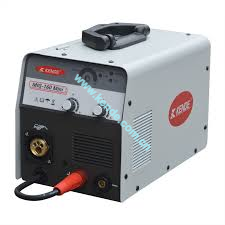
An Inverter MIG Welder operating on a construction site or rural workshop faces constant input voltage fluctuations. Extension cords running from distant panels cause voltage drop. Industrial machinery starting nearby creates voltage sags. Traditional transformer welders lose arc stability under these conditions, forcing operators to stop and restart. Do you know how a unit from kende maintains steady performance when line voltage varies unpredictably?
The inverter design converts incoming AC power to high-frequency DC before stepping it down. This conversion happens at frequencies around twenty thousand hertz, compared to fifty or sixty hertz in conventional machines. High-frequency operation allows the use of small, lightweight transformers that respond instantly to control signals. A digital signal processor monitors input voltage hundreds of times per second. When the processor detects a drop from two hundred thirty volts to two hundred volts, it adjusts the switching duty cycle within microseconds. This adjustment keeps the output welding current at the operator's selected value without visible arc change.
Voltage feed-forward control represents the key stability mechanism. Traditional welders use feedback control, which corrects output only after a disturbance occurs. A welder with feed-forward predicts the effect of input changes before they affect the arc. The control circuit measures incoming voltage and calculates required switching adjustments instantly. This predictive approach eliminates the delay inherent in feedback systems. Arc length remains constant even when supply voltage drops by fifteen percent. Operators cannot detect any change in weld puddle behavior or sound character.
Energy storage within the inverter's DC bus provides additional stability. Large capacitors hold electrical charge that supplements input power during brief sags. A voltage dip lasting three to five cycles drains minimal charge from these capacitors. The stored energy maintains full output power until the control circuit compensates. This storage capacity separates inverter designs from transformer machines, which have no energy reserve. An Inverter MIG Welder continues welding through dips that would extinguish a conventional arc completely.
Thermal management supports long-term voltage stability. Power semiconductors generate heat during the switching process. Excessive heat reduces switching efficiency, making the machine sensitive to voltage fluctuations. Active cooling fans maintain component temperature within a specified operating window. Temperature-compensated circuits adjust switching parameters as heat rises. A welding system operating at peak internal temperature still holds arc stability equal to cold-start performance. This thermal stability proves essential for continuous welding shifts in warm environments.
https://www.kende.com.cn/product/mig-mag/ lists input voltage tolerance specifications for each inverter model. The product page indicates acceptable voltage range and sag duration limits. Buyers can review arc stability test reports before purchase. Factory application engineers recommend matching machine capacity to expected power conditions. Each welding system undergoes simulated voltage fluctuation testing before shipment. Why accept arc interruptions when inverter technology delivers steady performance?

 English
 Arabic
 French
 Spanish
 Deutsch
 Turkish
 Dutch
Dutch
 Italiano
 Russian
 Romaian
 Portuguese (Brazil)
 Greek
Greek