


Damage Prevention Packaging Is Becoming a Supply Chain Productivity Tool
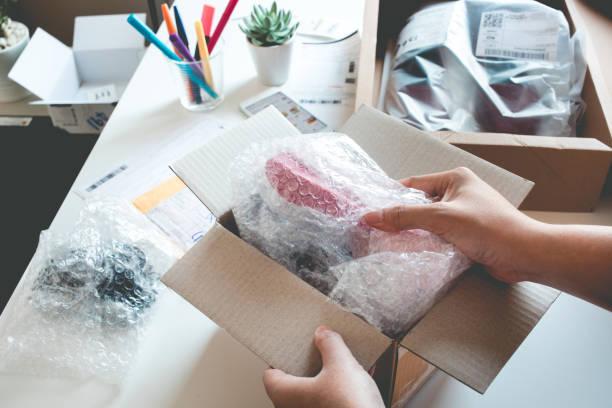
Protective packaging is becoming more strategic as manufacturers, retailers, logistics providers, and e-commerce operators manage fragile shipments, parcel density, fulfillment speed, returns exposure, and packaging waste reduction. The Protective Packaging Market size was valued at USD 37.8 billion in 2025 and is estimated at USD 39.8 billion in 2026. The market size is expected to grow to USD 51.81 billion by 2032, registering a CAGR of around 4.61% during 2026-32.
Protective packaging includes flexible cushions, foam formats, rigid inserts, inflatable systems, protective mailers, molded fiber, paperboard protection, void-fill materials, wrapping formats, insulation packaging, blocking and bracing formats, and surface-protection systems. These formats are used to reduce product damage during storage, handling, transport, fulfillment, and reverse logistics.
Parcel-intensive fulfillment is reshaping protection needs
The Protective Packaging Market growth is strongly linked to the operational rise of parcel-based distribution. Products now move through more sorting points, regional hubs, delivery networks, and return channels, which increases exposure to compression, vibration, drops, abrasion, and handling variability.
UPS reported that it delivered an average of 20.8 million packages per day in 2025, totaling 5.2 billion packages during the year. This operating scale highlights why protective packaging is no longer treated as a secondary packing material. It supports damage control, warehouse productivity, customer delivery consistency, and lower replacement frequency across high-volume distribution systems.
Flexible protective packaging leads product demand
Flexible protective packaging grabbed market share of 45%, making it the leading product type. This format includes air cushions, bubble materials, protective wraps, mailers, flexible foam, and film-based cushioning structures. Its lead reflects adaptability across irregular product shapes, variable parcel dimensions, lightweight shipping, and fast pack-station usage.
The Protective Packaging Market trends favor flexible formats because fulfillment operators need materials that can be stored efficiently, dispensed quickly, and adapted across mixed-SKU orders. Flexible protection also supports high-speed packing environments where space efficiency and material availability directly affect outbound throughput.
E-commerce and retail fulfillment anchor end-use demand
E-commerce and retail fulfillment grabbed 35% of the market, making it the leading end-use industry. This segment relies on protective packaging to manage mixed product sizes, fragile goods, residential delivery exposure, reverse logistics, and high-volume order variability.
Amazon states that 99.7% of mixed-material mailers containing plastic and paper were replaced with recyclable paper alternatives in the U.S. and Canada, while 100% of packaging material in Europe and India is household recyclable. This type of packaging redesign strengthens demand for recyclable mailers, paper void fill, molded fiber inserts, and right-sized protective formats across large fulfillment networks.
Material compliance is increasing redesign pressure
Packaging-waste regulation is creating stronger pressure on suppliers that still depend on difficult-to-recycle plastic films, mixed-material mailers, multilayer formats, and high-volume disposable cushioning. Buyers increasingly need packaging that combines protection performance with documented recyclability, recoverability, and material compliance.
The European Commission states that Regulation (EU) 2025/40 entered into force on 11 February 2025 and will generally apply from 12 August 2026. This regulation reinforces the importance of recyclable packaging design, waste prevention, and clearer packaging accountability. For the Protective Packaging Market forecast, compliance readiness is becoming a procurement filter rather than a secondary sustainability attribute.
Paper-based automation is changing pack-station economics
Automated protective packaging systems are gaining relevance because fulfillment centers need faster packing, reduced material waste, and more consistent void-fill decisions. Manual overpacking remains a cost and waste issue, especially where packers handle a wide variety of SKUs under time pressure.
Ranpak announced in 2025 that its DecisionTower with FillPak Trident uses machine vision to measure parcel voids and dispense paper void fill, with up to 35% paper reduction possible. This development reflects a wider shift toward automation-led packaging optimization, where equipment, software, and material systems work together to reduce variability and improve fulfillment efficiency.
Asia Pacific leads regional demand
Asia Pacific leads with a 40% share of the global market. The region’s position is supported by large parcel networks, export manufacturing, electronics production, consumer goods distribution, food delivery activity, and logistics infrastructure expansion across major manufacturing and retail economies.
Across North America, South America, Europe, Middle East and Africa, and Asia Pacific, demand is shaped by parcel activity, industrial shipping, packaging policy, and fulfillment infrastructure. China’s State Post Bureau reported that the country’s courier sector handled 174.5 billion parcels in 2024, up 21% year on year. This scale strengthens regional demand for lightweight cushions, corrugated protection, mailers, paper void fill, and inflatable protective materials.
Sustainability must be balanced with performance
Protective packaging suppliers face a clear performance challenge: recyclable or paper-based formats must still protect products under real logistics conditions. If a substitute material reduces protection quality, it can increase damage, returns, replacement shipments, and total material use.
This is why the Protective Packaging Market trends are shifting toward measured protection rather than basic material substitution. Packaging users increasingly evaluate compression strength, drop performance, material efficiency, recyclability, storage footprint, automation compatibility, and pack-station speed together. The strongest solutions are those that reduce excess material without weakening shipment protection.
Competition is shaped by automation and material breadth
More than 25 companies are actively engaged in producing protective packaging. Top 5 companies acquired around 30% of the market share. Packaging Corporation of America, Pregis LLC, Ranpak Holdings Corp., International Paper Company, Smurfit Westrock plc, Sealed Air Corporation, Mondi plc, Amcor plc, Nefab Group AB, Storopack Hans Reichenecker GmbH, Cascades Inc., Signode Industrial Group LLC, Huhtamäki Oyj, Intertape Polymer Group Inc., and UFP Packaging LLC are among the market players.
Competitive positioning depends on product breadth, recyclable material platforms, cushioning performance, automation capability, fulfillment-channel reach, and customer-specific design support. Pregis launched the Sharp Lynx 18 automated bagger in March 2026 for space-constrained fulfillment operations. Ranpak also announced three automated packaging solutions in January 2025, including PadPak Multi-Station for automated paper cushioning delivery.
Conclusion
Protective packaging is moving from a cost-control packaging item to a supply chain performance tool. The category is shaped by parcel growth, e-commerce fulfillment, recyclable packaging redesign, automation, and Asia Pacific logistics scale. Vyansa Intelligence positions the market’s expansion around flexible protective packaging leadership, e-commerce and retail fulfillment demand, and stronger requirements for damage prevention with lower packaging waste.

 English
 Arabic
 French
 Portuguese
 Deutsch
 Turkish
 Dutch
Dutch
 Italiano
 Russian
 Romaian
 Portuguese (Brazil)
 Greek
Greek